



















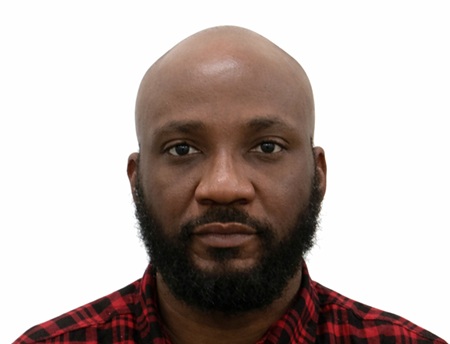
- Could you please introduce yourself and describe your area of expertise?
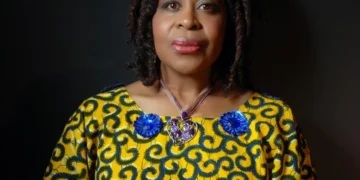
I am Opeyemi Alamutu, an environmental engineer with more than fourteen years of experience spanning construction project engineering, industrial health and safety, drilling-fluids engineering, industrial wastewater treatment, and now municipal stormwater engineering. I hold a Master of Science in Environmental Engineering from Michigan Technological University and a Bachelor of Science in Chemical Engineering from Obafemi Awolowo University, Nigeria. I currently serve as a Stormwater Engineer with Ramsey County Public Works in Saint Paul, Minnesota, where I design flood-mitigation infrastructure, drainage systems, and green infrastructure for communities across the county. My work sits at the intersection of climate science, civil infrastructure design, and water-quality protection, and I’ve authored four peer-reviewed publications on water resource management, climate-driven hydrology, and industrial environmental safety.
- Your career spans over a decade in environmental and industrial engineering. What pivotal experiences most influenced your current focus on stormwater management and climate-resilient infrastructure?
One of the most formative periods of my career came early on, working as a Mud Engineer at Halliburton and later as a Wastewater Treatment Engineer at Bibstar Offshore Services in Nigeria’s oil and gas sector. Those roles taught me, firsthand, how quickly a small lapse in environmental control — a contaminated discharge, an unmonitored spill risk — can escalate into a serious ecological and safety event. That experience shaped my conviction that engineering for environmental protection has to be proactive, not reactive. When I later pursued graduate study in Environmental Engineering at Michigan Tech, and began co-authoring research on Great Lakes hydrology with Professor Brian Barkdoll, I saw how that same proactive, data-driven philosophy applies directly to stormwater and flood-risk engineering in the U.S. — which is now the center of my work at Ramsey County.
- You’ve worked across Nigeria’s energy sector and now within U.S. municipal government. How have these diverse experiences shaped your understanding of environmental engineering in the U.S. market?
Working across Nigeria’s oil and gas sector and now within U.S. municipal government has given me a genuinely comparative view of environmental engineering practice. In Nigeria, I learned to design and problem-solve in environments where regulatory infrastructure and monitoring resources are often stretched thin, which forces an engineer to build in redundancy and robustness by default. In the U.S., I work within a highly structured regulatory framework — the Clean Water Act’s MS4 stormwater permitting program, EPA and state pollution-control oversight — that demands rigorous documentation and measurable compliance. Bringing that Nigerian-honed instinct for resilient, resource-conscious design into a U.S. regulatory environment has made me a stronger, more adaptable engineer.
- Your expertise emphasizes hydrologic and hydraulic modeling and GIS-based infrastructure assessment. Can you explain what this involves and why it’s crucial for the future of both Nigeria and U.S. water systems?
My work is centered on hydrologic and hydraulic modeling, GIS-based infrastructure inventory, and climate-resilient stormwater design — essentially, using data to figure out how much water a piece of infrastructure needs to handle, where it’s likely to fail, and how to redesign it before it does. This matters enormously for the U.S. because so much of the country’s stormwater infrastructure was engineered decades ago to rainfall standards that no longer reflect today’s storm intensities. It matters for Nigeria too, where rapid urbanization is outpacing drainage infrastructure investment in cities like Lagos and Port Harcourt. In both contexts, the tools are the same: better data, better modeling, and infrastructure designed for the climate we actually have, not the one we used to have.
- In your work at Ramsey County, you’ve led flood-mitigation and drainage infrastructure projects. How does this tie into national priorities such as flood resilience and water security?
At Ramsey County, I’ve led engineering work on projects like the Eustis Street flood mitigation project and the Hodgson Road stormwater improvement project, along with a countywide inventory of more than 11,000 storm sewer structures. Each of these ties directly into a national priority: flood resilience. Flooding is the most common and costly natural disaster in the United States, and the federal government has responded with real investment — the Bipartisan Infrastructure Law’s Clean Water State Revolving Fund, FEMA’s Building Resilient Infrastructure and Communities program. My work is where that federal policy meets the ground: designing the actual pipes, ponds, and drainage networks that keep communities safe and protect water quality.
- What unique challenges have you encountered while developing flood-mitigation designs for aging infrastructure, and how have you addressed them?
One of the biggest challenges is that a lot of stormwater infrastructure is aging and undocumented — you’re often working with incomplete records of what’s actually buried underground. On the Storm Sewer Infrastructure Inventory project, we addressed that by building a GIS-based asset inventory essentially from the ground up, validating structures in the field and cross-referencing them against historical records. The other major challenge is designing for a moving target: climate change means the rainfall data engineers have relied on for decades is becoming less reliable. We address that by incorporating updated precipitation modeling and building in extra capacity margins rather than designing strictly to historical storm-frequency assumptions.
- Your publications suggest a strong focus on climate-driven hydrology. What role does applied research play in accelerating stormwater resilience?
Research plays a huge role — honestly, it’s the foundation. My co-authored paper on Great Lakes water-level trends applied statistical methods to long-term hydrological data to show how climate change is altering water-level patterns, with direct implications for shoreline and urban infrastructure. That kind of applied, peer-reviewed research gives practicing engineers like me the evidence base to justify updated design standards to regulators and municipal decision-makers. Without that research foundation, stormwater resilience stays theoretical instead of becoming something you can actually build.
- You’ve applied tools like GIS, AutoCAD, and hydraulic modeling software throughout your career. How do you see technology transforming civil and environmental engineering roles in the next five years?
I think GIS and hydraulic modeling software are going to keep getting more sophisticated and more accessible — tools like SWMM, HEC-RAS, and GIS-based asset management are already transforming how municipal engineers assess infrastructure at scale. In the next five years, I expect real-time sensor data and predictive modeling to become standard for flood-prone stormwater systems, letting municipalities anticipate failures before they happen, rather than just responding after a storm. That shift — from reactive infrastructure management to predictive infrastructure management — is going to be one of the biggest changes in civil and environmental engineering.
- Part of your endeavor aims to bridge gaps between applied research, municipal engineering, and regulatory compliance. What strategies have you found effective for fostering this kind of integration?
The most effective strategy I’ve found is staying grounded in both the research and the regulatory side at the same time. I try to make sure the modeling and design work I do at Ramsey County is informed by current peer-reviewed research, and conversely, that my published research stays connected to real, on-the-ground engineering constraints. Serving as a peer reviewer for an international environmental journal and staying active in professional research communities like Sigma Xi helps me keep that connection alive, so the science and the practice keep informing each other rather than drifting apart.
- How does your work directly contribute to national security and economic competitiveness, especially given growing interest in domestic infrastructure resilience?
Resilient water infrastructure is genuinely a matter of public safety and economic security. Flood damage costs the U.S. billions of dollars a year, and aging, undersized stormwater systems put communities — and the economic activity that depends on them — directly at risk. Every flood-mitigation project I design is, in a very concrete sense, protecting critical infrastructure and reducing the economic disruption that comes with infrastructure failure. That’s not abstract — it’s the direct, measurable outcome of the engineering work I do every day.
- For young professionals entering environmental or water-resource engineering, what advice would you give them on developing impactful careers that align with national priorities?
Get comfortable with both the technical tools and the regulatory landscape — they’re inseparable in this field. Learn hydraulic modeling, GIS, and data analysis, but also understand the Clean Water Act, MS4 permitting, and how public infrastructure funding actually works, because that’s what turns good engineering into built infrastructure. And publish. Putting your work through peer review, even alongside a full-time engineering job, sharpens your thinking and connects you to a much wider professional community than your immediate workplace.
- What informed your choice of course of study?
I actually started in chemical engineering, at Obafemi Awolowo University in Nigeria, because I was drawn to understanding how physical and chemical processes work at scale — mass balances, reaction systems, industrial processes. Working in Nigeria’s oil and gas sector afterward showed me how directly those same principles apply to environmental protection: treating wastewater, controlling emissions, managing waste streams. That experience is what led me to pursue a Master’s in Environmental Engineering at Michigan Tech, where I could focus that chemical engineering foundation specifically on water resource and environmental systems.
- You had the privilege of schooling in both Nigeria and the United States. How has studying in two different settings impacted you?
Studying in Nigeria gave me a strong grounding in engineering fundamentals under resource constraints — that shapes how you think; you learn to be resourceful and rigorous because you can’t always rely on ideal conditions. Studying in the U.S. exposed me to more advanced modeling tools, research infrastructure, and a much more structured regulatory framework. Having both, I think, makes for a more well-rounded engineer. You understand the fundamentals and the cutting-edge tools, and you understand how to make good engineering work across very different resource environments.
- With over a decade in the oil and gas and industrial sector, how challenging would you say that sector is?
It’s demanding, genuinely. Working as a Mud Engineer on drilling operations, and later in industrial wastewater treatment, means operating in high-stakes environments where a mistake has real environmental and safety consequences, often on tight timelines and in remote or offshore locations. But it’s also one of the best trainings you can get in operational discipline and environmental risk management. Everything I do now in municipal stormwater engineering — the attention to compliance, the systems thinking, the urgency around getting it right — traces directly back to that early industrial experience.
- You now work in public infrastructure. Are you impressed by the level of investment in resilient water infrastructure in Nigeria and other developing countries, especially in Africa?
Progress is real but uneven, and that mirrors what I’ve seen in the U.S. too — resilient infrastructure investment tends to move in the direction of available financing and regulatory pressure, not necessarily in the direction of greatest need. In Nigeria and across much of Africa, rapid urban growth is outpacing drainage and flood-control infrastructure investment, and the financing and regulatory frameworks to catch up are still developing. In the U.S., we’re fortunate to have programs like the Clean Water State Revolving Fund and FEMA’s resilience grants, but even here, stormwater infrastructure has been chronically underfunded relative to need. Closing that gap, in both places, comes down to the same things: sustained public investment and engineers willing to make the case for it with solid data.
- Having begun your professional career in Nigeria before working abroad, what would you say fascinates you most about working in Nigeria?
What fascinates me most is the resourcefulness. Working in Nigeria’s energy sector, I saw engineers solve serious technical problems with limited resources and infrastructure support — and do it well. That environment forces you to be resilient and creative, and it’s a skill set that has served me throughout my career, including now, in a U.S. municipal engineering role where resources are also never unlimited.
- How would you define career success?
I’d define it as producing infrastructure that actually protects people — measurable outcomes, not just credentials or titles. A flood-mitigation project that keeps a neighborhood dry during the next major storm, a piece of research that changes how another engineer approaches a design problem — that’s success to me. It’s about tangible impact, not position.
- Since relocating out of Nigeria, what would you say you miss the most about Nigeria?
The people, honestly, and the sense of community. There’s a warmth and directness in day-to-day life in Nigeria that I haven’t quite found anywhere else, and I still miss it.