




















Most people never think about the systems that keep the lights on, the fuel flowing, or the packages arriving on time until one of them fails. Behind those systems sits a discipline that rarely gets public attention: reliability maintenance and engineering safety. It is the work of anticipating equipment failure before it happens, of keeping pipelines, mines, terminals, and logistics networks compliant with safety regulation, and of making sure that the infrastructure modern economies depend on keeps running without incident.
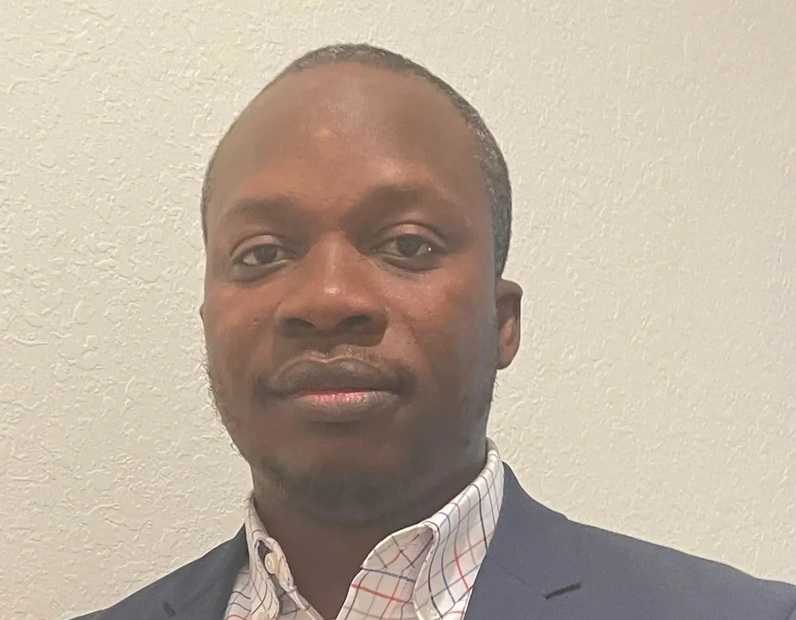
Ebenezer Alawode has spent more than twenty years inside that discipline. A Certified Maintenance and Reliability Professional (CMRP) and Project Management Professional (PMP), Alawode currently serves as Senior FEC Program Manager for Reliability Maintenance and Engineering Safety at Amazon, where he leads global programs designed to reduce high-risk operations for the company’s engineers and technicians. His career has taken him from instrumentation technician on Shell’s production facilities in Nigeria’s Niger Delta, through maintenance planning and turnaround leadership roles at Shell, into reliability and computerized maintenance management system (CMMS) leadership positions with Imperial Oil and Husky Energy in Canada’s oil sands, and on to managing hydrocarbon systems and multimillion-dollar fleet assets across five mine sites for Barrick Gold’s Nevada Gold Mines in the United States. Before joining Amazon, he led maintenance operations for a liquefied natural gas (LNG) import terminal in Miami for New Fortress Energy.
“Reliability is not a back-office function,” Alawode said. “It is a frontline determinant of whether infrastructure, and the people who depend on it, stay safe. Every time a facility operates for years without a serious incident, that is not automatic. It is engineered, planned, and maintained.”
The consequences of getting reliability wrong are well documented. Pipeline ruptures, mine equipment failures, and unplanned shutdowns at power and logistics facilities do not merely cost money; they can cost lives, disrupt supply chains, and in some cases trigger environmental damage that takes years to remediate. In the United States, regulatory bodies including the Environmental Protection Agency, the Department of Transportation, and the Pipeline and Hazardous Materials Safety Administration exist because of exactly these risks.
“Having worked directly within these regulatory frameworks at an LNG terminal, I saw firsthand how rigorous compliance and proactive maintenance planning are what stand between routine operations and catastrophic failure,” Alawode explained.
What elevates this work to a matter of national and even global significance, according to Alawode, is scale. Modern economies run on interconnected, capital-intensive infrastructure, energy grids, mineral-producing mines, LNG terminals, and vast logistics networks, where a single reliability failure can cascade into regional shortages, price spikes, or safety incidents that erode public confidence in essential services. Governments have increasingly taken notice. In the United States, growing policy attention to grid modernization, critical mineral supply chains, and domestic infrastructure resilience reflects a broader recognition that reliability engineering is not a niche technical specialty, but a pillar of economic security.
“Nations and companies that adopt proactive, data-driven reliability strategy reduce downtime, protect their workers, and preserve the integrity of the infrastructure their economies depend on,” he said. “Those that do not fall further behind with each passing failure.”
Alawode pointed to technology as one of the biggest forces reshaping the field. Enterprise systems such as SAP’s PM and MM modules, scheduling platforms like Primavera P6, and a growing suite of predictive analytics and artificial intelligence tools are shifting maintenance from a reactive, calendar-based practice toward a proactive, data-driven one. In his current role, he uses regulatory research, technical writing, and data analysis to flag high-risk operations before they result in incidents, working directly with senior leadership to prioritize safety investment.
He is also candid about the uneven pace of this transformation worldwide. Having begun his career in Nigeria before working across Canada and the United States, Alawode has seen both ends of the spectrum firsthand.
“In Nigeria, and across much of the developing world, the technical talent needed to run world-class reliability programs is abundant,” he said. “But investment in digital maintenance infrastructure and consistent regulatory enforcement often lags behind what is available in North America. Closing that gap matters not only for those economies, but for global supply chains that increasingly depend on reliable production and export capacity from every region. Meanwhile, in mature markets like the United States and Canada, the challenge is different: aging infrastructure, rising demand from data centers and electrification, and a workforce transition as experienced maintenance professionals retire.”
Both challenges, he argues, point to the same conclusion: reliability and engineering safety expertise is a strategic resource that deserves more public attention than it typically receives.
“Professionals in this field do not often seek the spotlight,” Alawode said. “We work in control rooms, on turnaround schedules, inside enterprise data systems, and on the shop floors of facilities most people will never see. But the next time critical infrastructure operates safely through a heat wave, a surge in demand, or years of continuous operation without incident, it is worth remembering that outcome was not automatic. As industrial demand grows and infrastructure ages worldwide, investing in that discipline, and in the people who practice it, is not a technical afterthought. It is a national and global priority.”
Ebenezer Alawode is a Certified Maintenance and Reliability Professional (CMRP) and Project Management Professional (PMP) with over 20 years of experience in maintenance engineering and reliability leadership across the oil and gas, mining, LNG, and logistics industries in Nigeria, Canada, and the United States. He currently serves as Senior FEC Program Manager for Reliability Maintenance and Engineering Safety at Amazon.