



















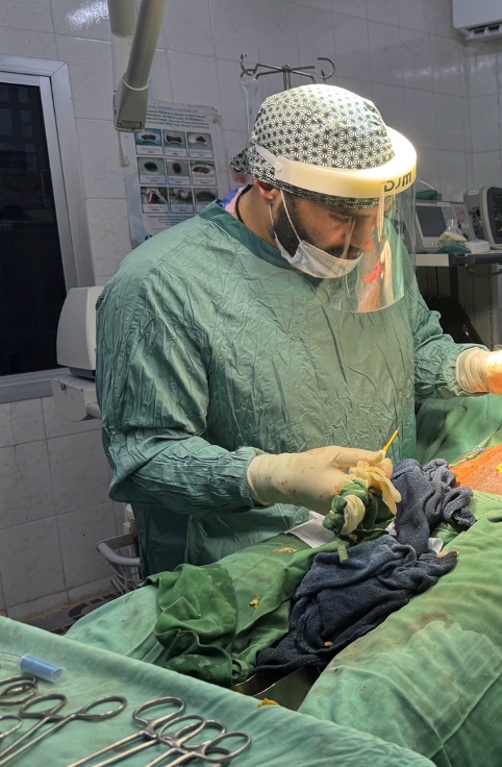
More than 50 scholarships are being funded for the 2026–2027 academic year through an educational initiative led by surgeon and humanitarian Dr Suhaib Ahmad, with a particular emphasis on nursing degrees and expanding access to higher education. The initiative represents an investment in the next generation of professionals, particularly in Sierra Leone and the wider West African region, where education remains central to long-term social and economic development.
West Africa is a region of extraordinary history, cultural heritage and human potential. For centuries, its societies have been centres of trade, scholarship and intellectual development. Yet despite this rich legacy, many communities continue to face significant challenges in accessing higher education, professional training and essential healthcare services.
Sierra Leone, in particular, has experienced a complex journey of development. Following independence in 1961, the country endured a devastating civil war between 1991 and 2002, followed by the Ebola epidemic of 2014–2016. These events placed considerable pressure on public institutions, disrupted educational opportunities and exposed longstanding vulnerabilities within the healthcare system.
Despite these challenges, Sierra Leone possesses a distinguished educational heritage. The establishment of Fourah Bay College in 1827 positioned the country as an important centre of higher learning in West Africa, attracting generations of students and scholars from across the region.
Today, the challenge is not a lack of ambition or talent, but ensuring that young people have the resources and opportunities to fulfil their potential.
Healthcare education remains particularly important. Nurses and other healthcare professionals are essential to delivering safe and accessible medical care, especially in rural and underserved communities. However, the financial costs associated with university education and professional training can place these careers beyond the reach of many capable students.
The scholarship initiative seeks to address some of these barriers by supporting students across several academic disciplines, with a substantial proportion of funding directed towards nursing degrees. By enabling aspiring healthcare professionals to pursue their qualifications, the programme aims to contribute to the development of a stronger and more sustainable healthcare workforce.
Beyond the immediate financial assistance, educational scholarships can have a lasting impact on families and communities. A university qualification can create opportunities for employment, financial independence and professional advancement, while allowing graduates to contribute their knowledge and skills to society.
The initiative also reflects an important principle in international development: lasting improvements in healthcare cannot be achieved through infrastructure and medical equipment alone. They require sustained investment in people, professional education and the development of local expertise.
For Sierra Leone and the wider West African region, strengthening educational opportunities is therefore not simply a matter of individual achievement. It is an investment in the institutions, services and leadership that will shape future generations.
As West Africa continues to navigate the challenges of healthcare development, economic inequality and access to education, initiatives supporting young professionals offer a practical contribution towards a more resilient and self-sufficient future.
The region’s greatest resource has always been its people. By investing in their education today, opportunities are being created not only for individual students, but for the families, communities and generations they may one day serve.