























The Great Migration, often described as the ‘8th Wonder of the World’, is a thundering, dust-filled spectacle of nearly two million wildebeest, zebra, and gazelle making their way over the vast plains of East Africa. As much as this theatre of wildlife remains a family bucket list item or romantic honeymoon dream, a growing number of solo adventurers are left asking whether this safari experience is still worth it when travelling alone.
For many, the idea of a solo safari in Kenya or Tanzania can feel daunting, given that the traditional image of an African bush getaway often depicts shared sundowners and group Land Rover tours. However, as the travel industry shifts toward more personalised, flexible experiences, the Great Migration is increasingly becoming a premier choice for those seeking solitude and a raw connection with nature.
The Rhythm of the Herd
Believe it or not, the Great Migration is not a single event but rather a year-long cyclical journey between the Serengeti in Tanzania and the Maasai Mara in Kenya. However, to witness the most exciting parts of this movement, timing is everything.
Between January and March, the herds come together in the southern Serengeti for the calving season. It’s a time for incredible abundance and intense drama as thousands of calves are born, which naturally attracts a high volume of predators. By July, the movement shifts north, leading to the world-famous Mara River crossings.
Peak Mara River crossings typically occur in August and September. This is where you’ll find the wildebeest braving crocodile-infested waters in a desperate search for greener pastures. It’s a sight that is as harrowing as it is magnificent.
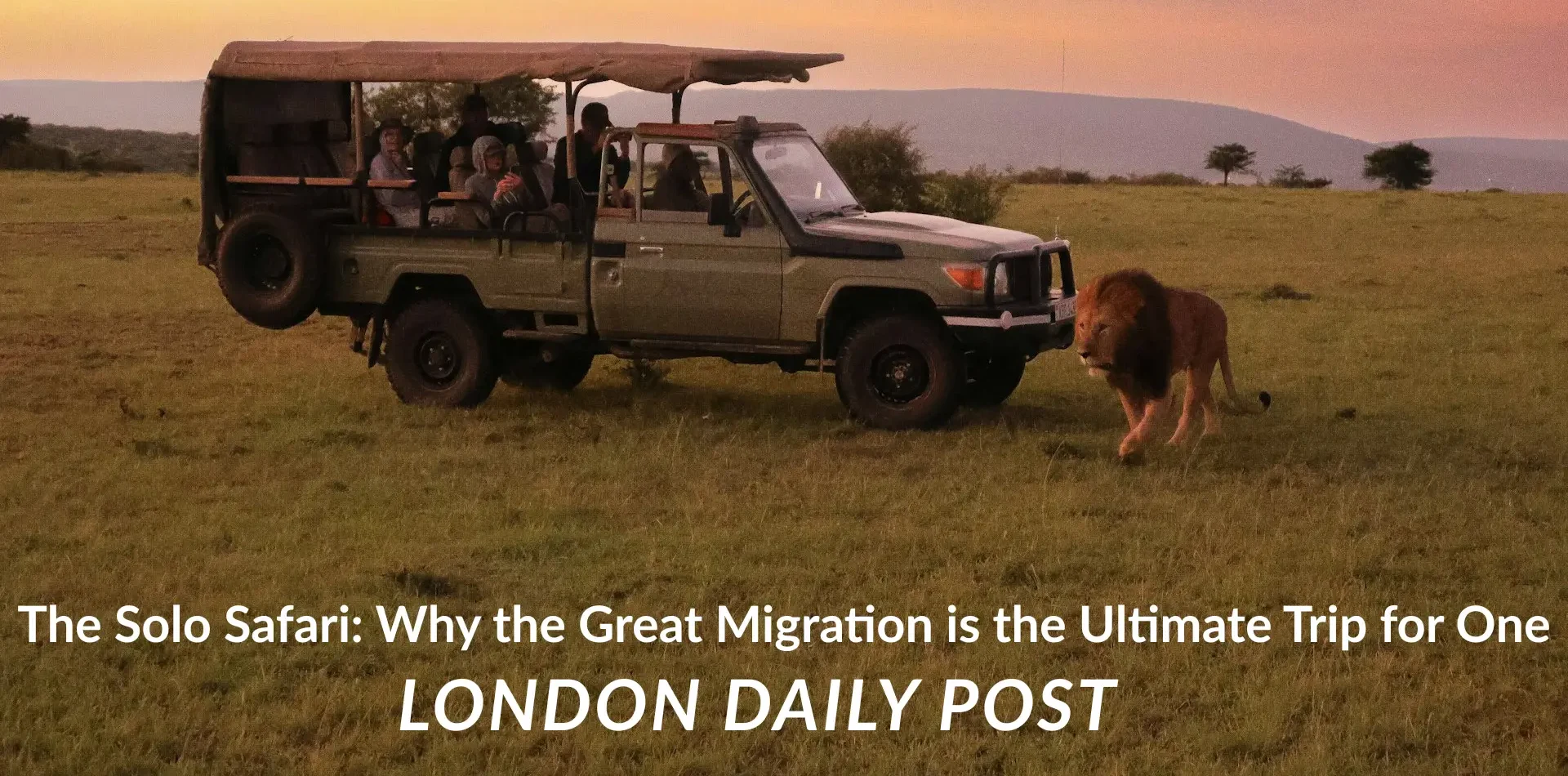
Travelling alone allows you to witness this cycle at your own pace. Without the competing and sometimes opposing interests of a group, solo visitors can spend hours at a single sighting, observing the herd’s subtle social hierarchies or waiting for the perfect moment to photograph a pride of lions as they begin their hunt.
The Economic Reality for Solo Travellers
One of the primary hurdles for solo travellers has long been the “single supplement”, which is the extra fee charged to those occupying a double room alone. However, the safari landscape is slowly changing. Many luxury lodges, such as those in the Elewana Collection or Nomad Tanzania, now offer periods where single supplements are waived, particularly during the shoulder seasons.
Furthermore, travelling solo doesn’t necessarily mean being lonely. Most safari camps are designed with the community at heart. Shared activities and “mess tent” dining mean you have the opportunity to swap stories with fellow travellers over a campfire in the evening while still enjoying the privacy of your own luxury tent at night. It offers a unique “best of both worlds” scenario: total independence by day and a warm, like-minded community by night.
Technology and the Modern Safari
For the independent traveller, the unpredictability of nature used to pose a risk to plans made ahead. To alleviate this, tech-driven solutions like the HerdTracker app come into play. These systems were developed to track the movement of the herds in real time, which allows solo adventurers to plan their itinerary with surgical precision, ensuring they are in the right place at the right time without the need for an expensive private entourage.
Choosing a small group set departure can also be a savvy move. These itineraries allow solo travellers to join a pre-arranged group, sharing costs while still enjoying the expertise of top-tier guides. It removes the logistical headache of navigating the border between Tanzania and Kenya, a process that can be tricky for first-time travellers.
Conclusion
The Great Migration is, by its very nature, an overwhelming experience. The sheer scale of the movement, the noise of the bellowing herds, and the vastness of the East African sky can sometimes be better processed in moments of quiet reflection.
While a solo trip requires more meticulous planning and a slightly larger budget for lodging and transfers, the payoff is a profoundly intimate encounter with the natural world. In an age where we are constantly connected, there is perhaps no better place to truly disconnect than in the middle of a thousand-strong herd on the Serengeti plains.
As more lodges start to cater to the independent market, there’s never been a better time to pack your binoculars and head south on your own. The herds are waiting, and you don’t need a plus-one to appreciate them.