























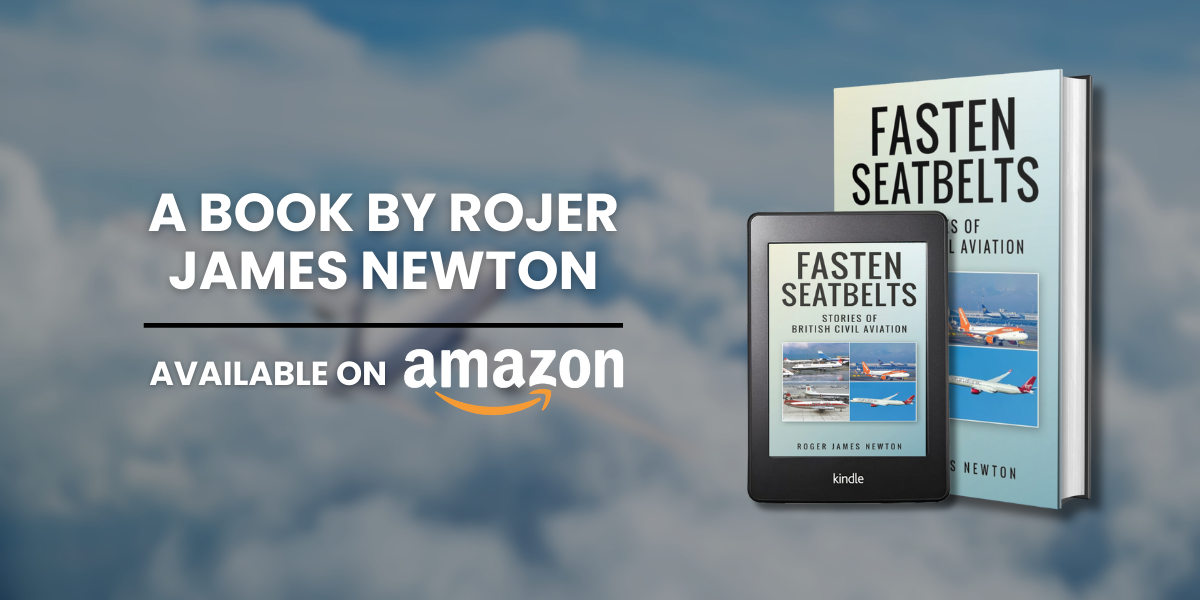
British civil aviation occupies a distinctive place in the country’s modern history. It developed alongside industrial change, public policy, and national ambition, shaping how Britain connected internally and internationally. In Fasten Seatbelts – Stories of British Civil Aviation, author Roger James Newton offers a comprehensive examination of this evolution, charting the sector’s progress from its formal beginnings in 1919 through to the complex realities of contemporary air travel.
Rather than presenting a narrow technical history, Newton situates aviation within its social and institutional context. Early chapters focus on the formative years of civil flight, when engineers, administrators, and pilots were working without established models. These pioneers faced challenges that extended beyond engineering, including public trust, regulation, and commercial viability. Newton’s account emphasises how early decisions created frameworks that would shape aviation for decades.
The post-war era marks a turning point in the book’s narrative. Newton devotes significant attention to the de Havilland Comet, recognising it as the world’s first commercial jetliner and a symbol of British innovation. At the same time, he addresses the aircraft’s structural failures with clarity, explaining how subsequent investigations led to fundamental changes in aircraft design and safety regulation. This balanced treatment reflects the book’s broader approach: progress is examined alongside its costs and lessons.
National projects and airlines feature prominently in later sections. Concorde is explored as an ambitious collaborative programme that reflected Britain’s confidence in its engineering capability. British Airways is examined through its organisational development and public role, illustrating how a national carrier adapted to regulatory change and commercial pressure. Virgin Atlantic’s emergence is presented as a disruptive influence that altered expectations around competition and customer experience.
Throughout the narrative, Rolls-Royce appears as a constant force within British aviation. Newton highlights the company’s sustained contribution to aerospace engineering, positioning it as a cornerstone of the nation’s global reputation. This perspective is informed by Newton’s own professional experience. Born in Stockport, he attended Stockport Grammar School before graduating in Law from the University of Sheffield in 1970. In 1974, he joined Rolls-Royce (1971) Limited in Derby as a Commercial Legal Adviser and later became Deputy Company Secretary at Babcock International plc.
Newton’s professional insight is complemented by a lifelong personal interest in aviation. His fascination began during his teenage years as a plane spotter at Manchester Airport in the early 1960s, providing a personal thread that runs quietly through the book. This combination of professional and personal engagement allows Newton to move confidently between institutional analysis and individual experience.
The final sections of Fasten Seatbelts look forward. Newton considers how sustainability, emerging propulsion technologies, and digital systems are shaping aviation’s future. Rather than offering predictions, he frames these developments within historical patterns, suggesting that the industry’s ability to adapt has always depended on learning from past experience.
Measured, informative, and grounded in first-hand knowledge, Fasten Seatbelts – Stories of British Civil Aviation contributes meaningfully to public understanding of an industry that has helped define Britain’s modern identity.
Book Details
Book Name: Fasten Seatbelts – Stories of British Civil Aviation
Author: Roger James Newton
ISBN: 978-1969644405
Available on Amazon: https://www.amazon.com/dp/1969644400