

























How to find someone has died? Searching for a loved one’s obituary or trying to locate recent death records in the United Kingdom can feel overwhelming, especially during an already difficult time. Whether someone is tracing a family tree, confirming a bereavement, or simply paying their respects, knowing exactly where to look makes the process far less stressful.
The good news is that the UK has a wealth of publicly accessible resources — from official government registers to newspaper archives and specialist genealogy platforms — that make it possible to find an obituary for a specific person, often within minutes.
I wrote this guide to explain all the main ways to find UK death records, from free online databases to official death certificate applications, so people can search for anyone for obituaries or records with the help of this guide.
What is a UK Obituary, and How is It Different from a Death Record?
Before diving into the search process, it helps to understand what different documents actually contain. The terms ‘obituary,’ ‘death notice,’ and ‘death record’ are often used interchangeably, but they refer to very different things.
An obituary is a tribute written by the family or a journalist that summarizes a person’s life, achievements, and personality. It typically appears in a local newspaper, and increasingly on dedicated funeral notice websites. Obituaries are entirely optional — not every family chooses to publish one.
A death notice is shorter, often just a few lines, and is placed directly by the family to announce the passing and, sometimes, the funeral details. It is a paid announcement and may appear alongside or instead of a full obituary.
A death record (or death certificate) is a legal document issued by the government following the mandatory registration of a death. In England and Wales, all deaths must be registered with the local register office within five days. Unlike obituaries, death records exist for every person who has died in the UK and are maintained by the General Register Office (GRO).
What Information is Needed Before Searching?
A successful search for a UK obituary or death record almost always depends on having a few key pieces of information ready. The more details a searcher can provide, the faster and more accurate the results will be.
The following details are the most useful to gather before beginning:
- Full legal name — including maiden name for women who were married, as obituaries and death records often list the birth name alongside the married name
- Approximate year or decade of death — even a rough estimate significantly narrows search results
- Town, county, or region in the UK where the person lived or passed away
- Date of birth or age at death — particularly helpful when searching for someone with a common name
- Names of close relatives — spouses, children, or parents are frequently mentioned in obituaries and can help confirm identity
If the exact date of death is unknown, searching a range of years is entirely possible on most platforms. It is also worth noting that not every death generates a published obituary — particularly for older deaths, private individuals, or those who requested minimal ceremony. In those cases, official death records become the primary source of information.
How to Find a UK Obituary Online
There are several reliable ways to find published obituaries in the UK. The most effective approach is to start with the free options before moving to paid subscription services.
Local and National Newspaper Archives
The majority of UK obituaries are published in local newspapers. Regional papers such as county gazettes, town chronicles, and local evening papers have carried death notices and obituary columns for well over a century — and many of them have now digitized their archives.
For recent deaths, visiting the website of the local newspaper for the area where the person lived is often the quickest starting point. Most national broadsheets, including The Times and The Daily Telegraph, maintain dedicated obituary sections with searchable online archives.
For older records, Findmypast hosts an extensive British newspaper archive spanning several centuries, with millions of pages indexed by name. The British Newspaper Archive, accessible through partner institutions and select libraries, is another highly regarded resource for historical death notices.
Public libraries across the UK also hold physical archives and microfilm reels of local papers — an invaluable resource for deaths that predate widespread digitization.
UK Obituary and Death Notice Websites Step-by-Step Methods
In recent years, specialist platforms have emerged that aggregate published funeral notices and obituaries from across the UK into a single, searchable database. These sites are particularly useful for deaths that have occurred within the last two decades.
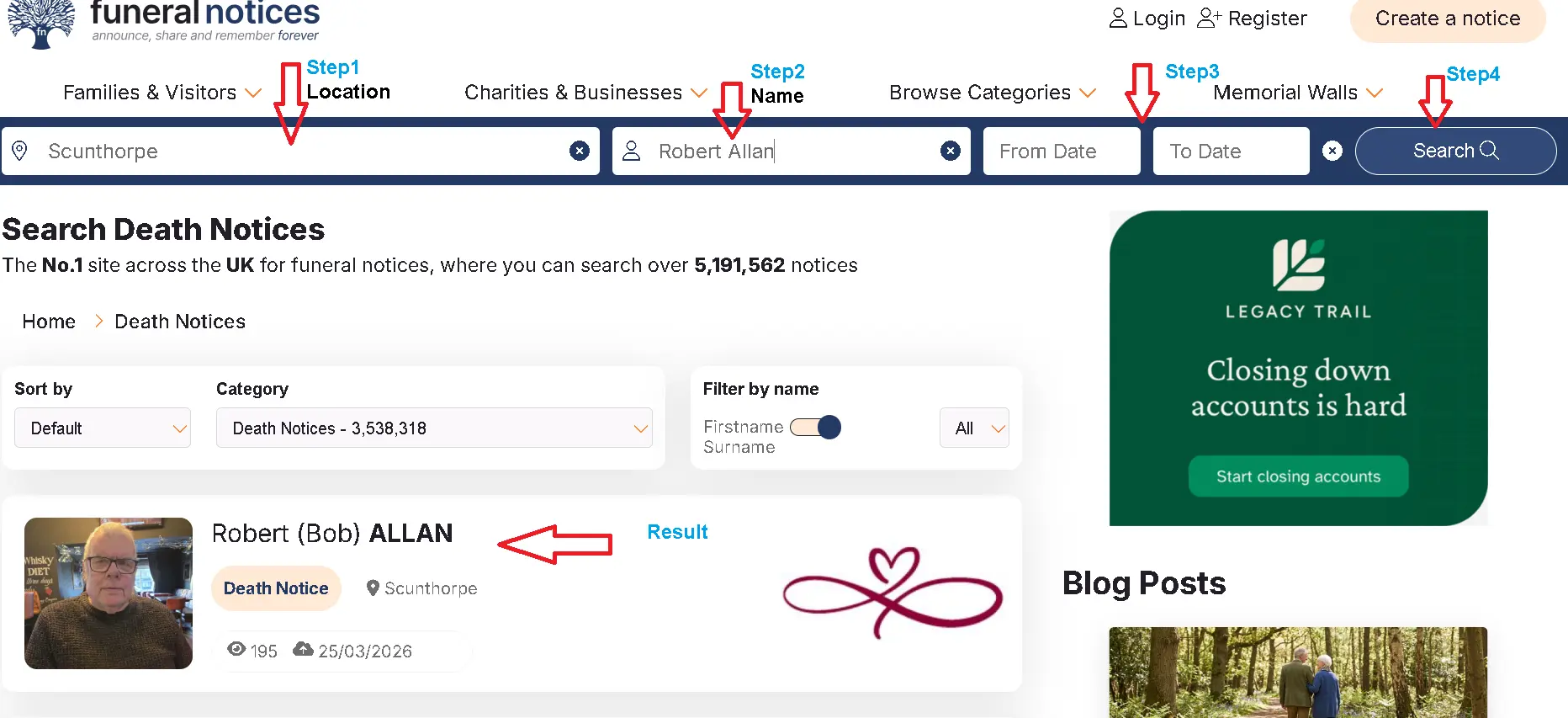
- Funeral-notices.co.uk — one of the most widely used platforms in the UK, allowing searches by name, location, and date of death. Many listings include service times, funeral home details, and online tribute pages. Follow the steps and check the results. Here is an example of Robert Allan.
- Funeral Guide — a nationwide directory that combines funeral home listings with published obituary notices. Follow the steps below
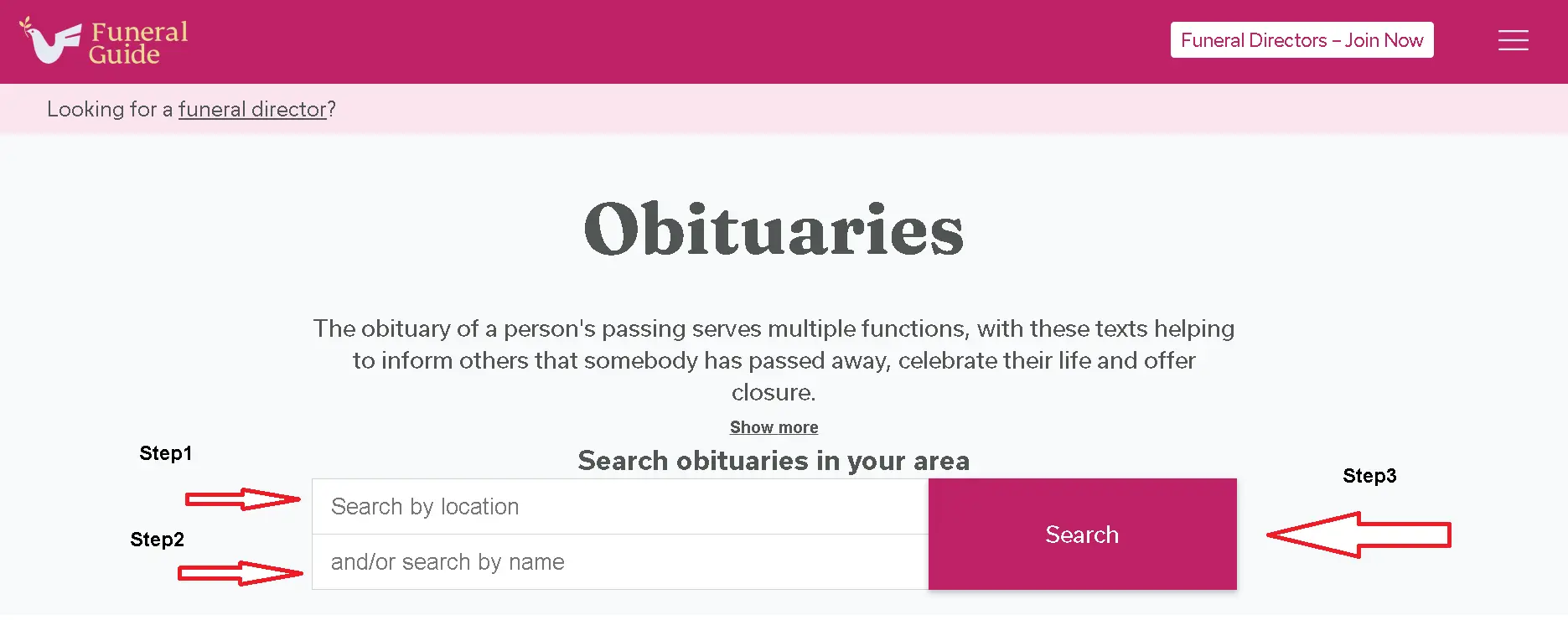
Anyone can search by location or by name

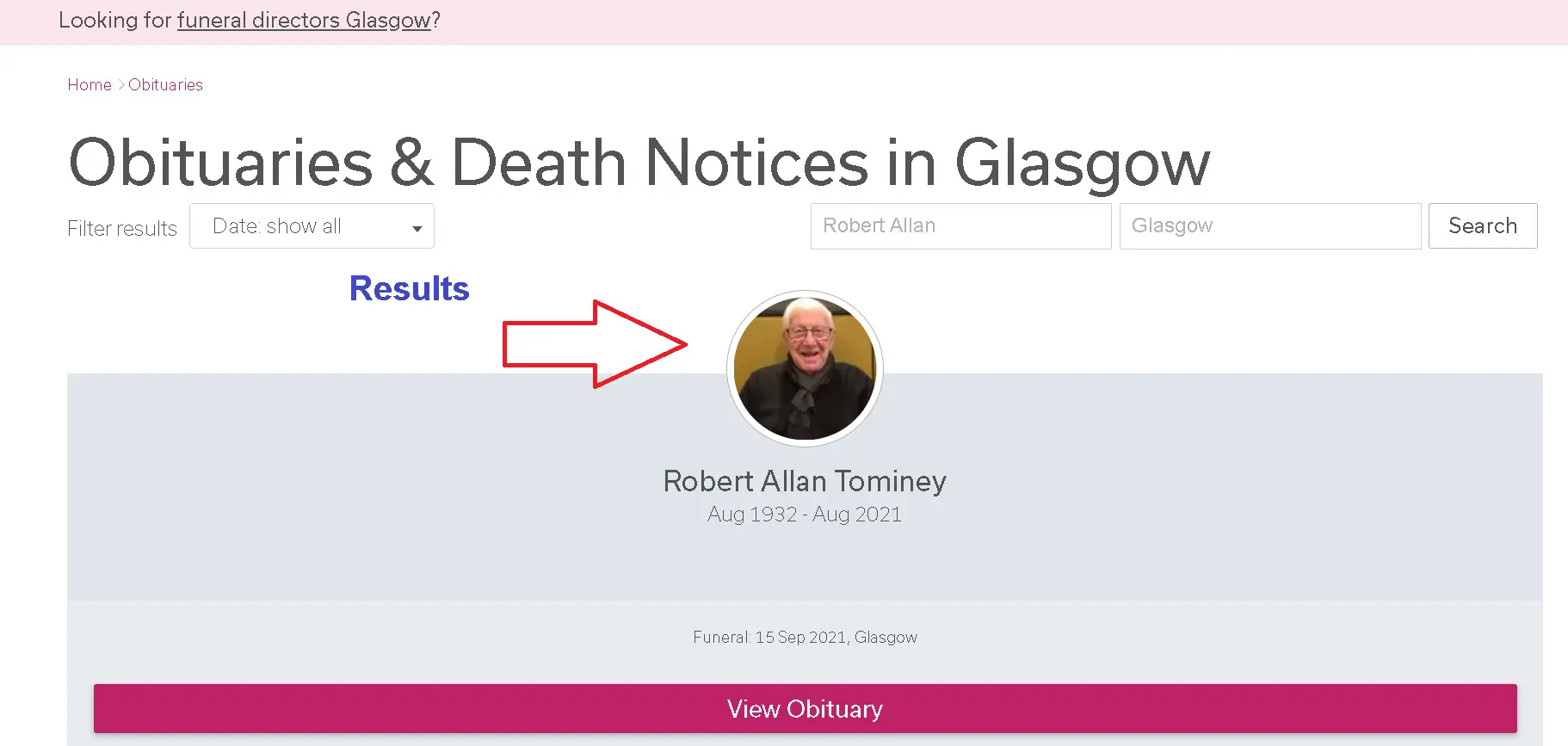
See the final result below
- findmypast.co.uk— for older records, Findmypast hosts an extensive British newspaper archive spanning several centuries, with millions of pages indexed by name. See the steps for the search.
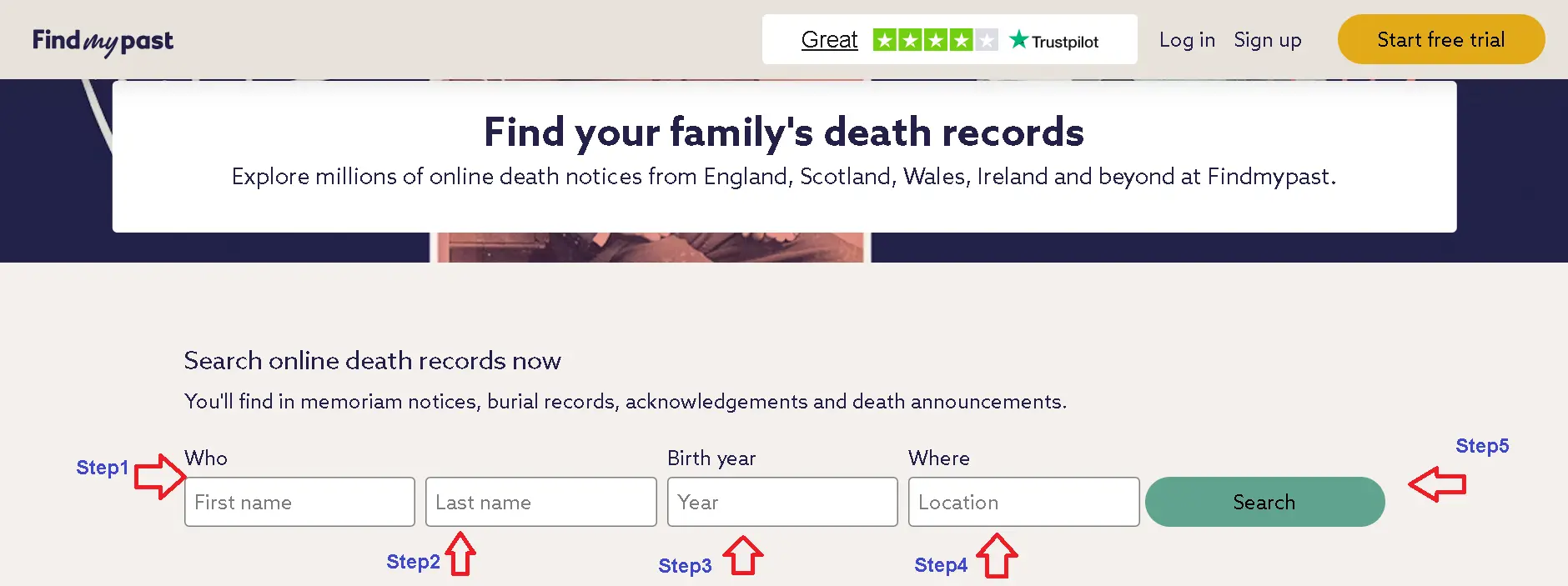
Just add details like first name, last name, birth year, location, and then click on the search button
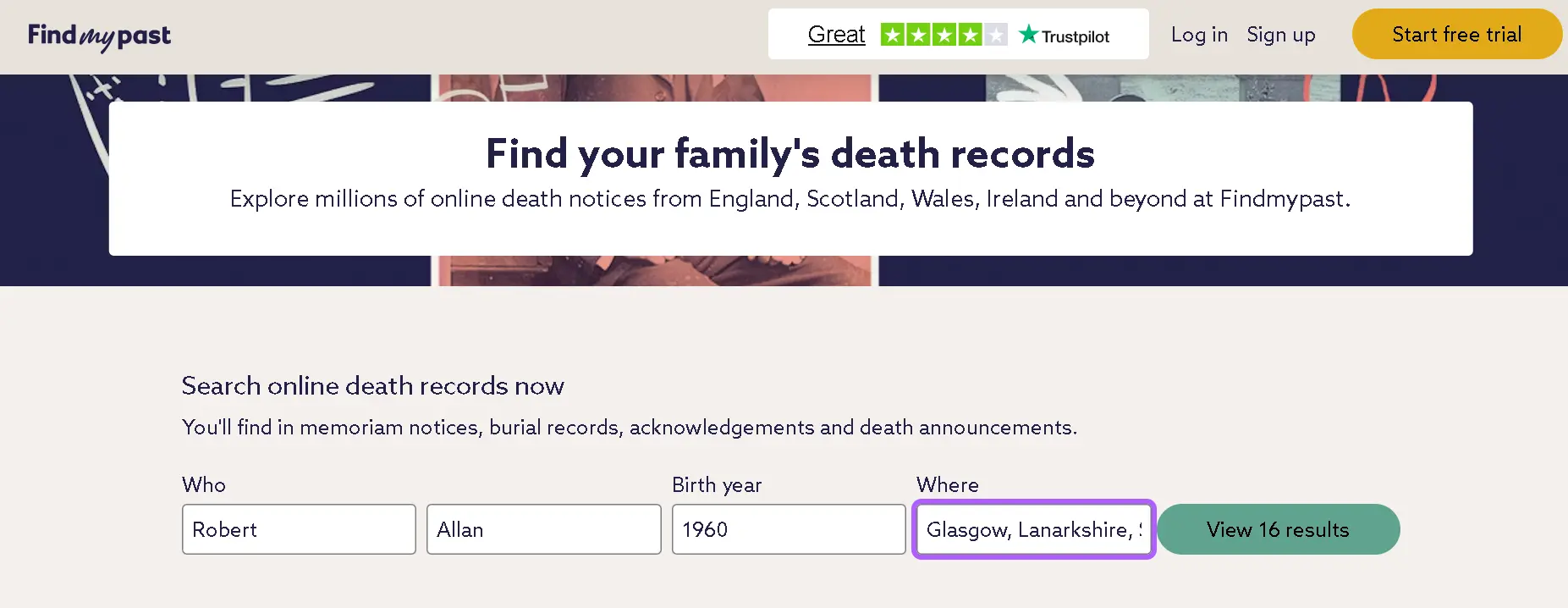
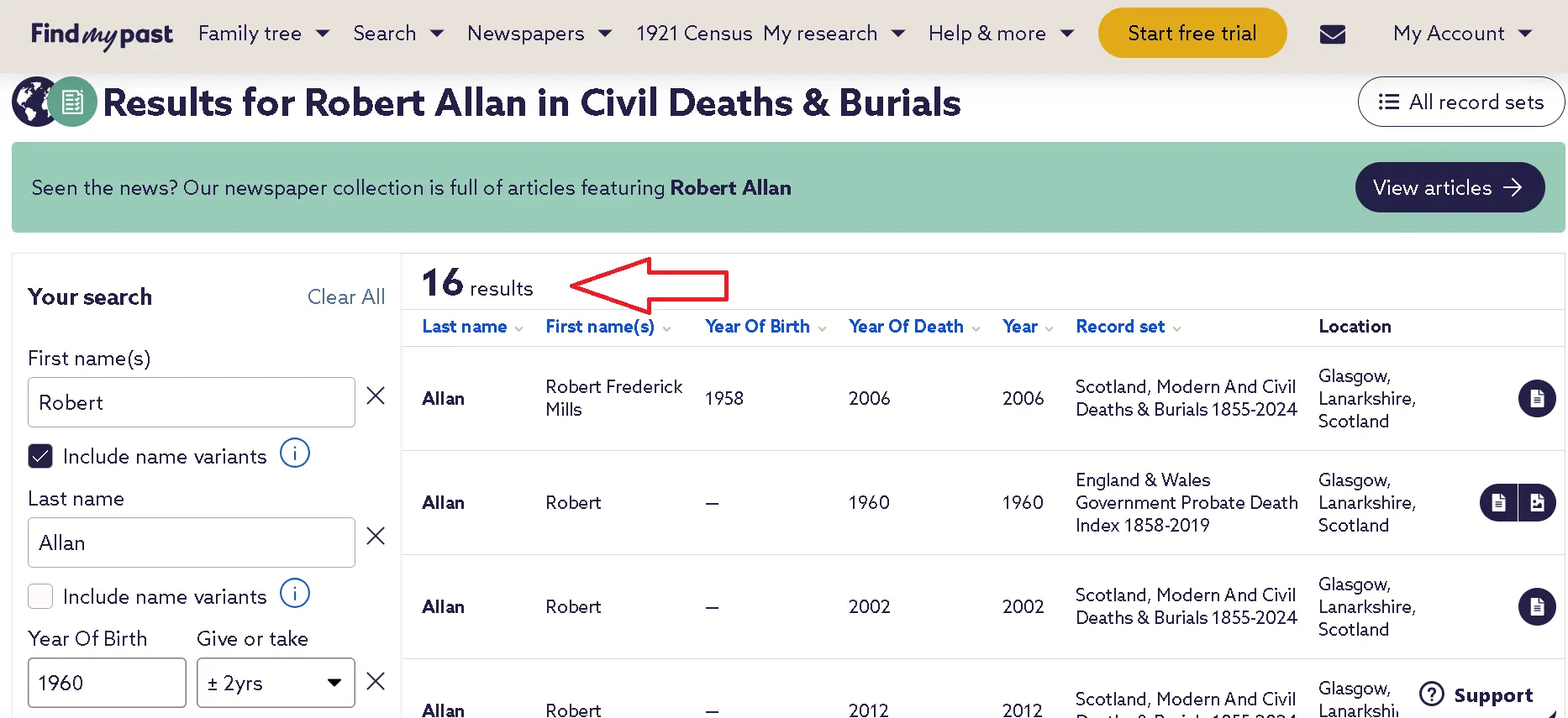
See the final results below after clicking on the search button
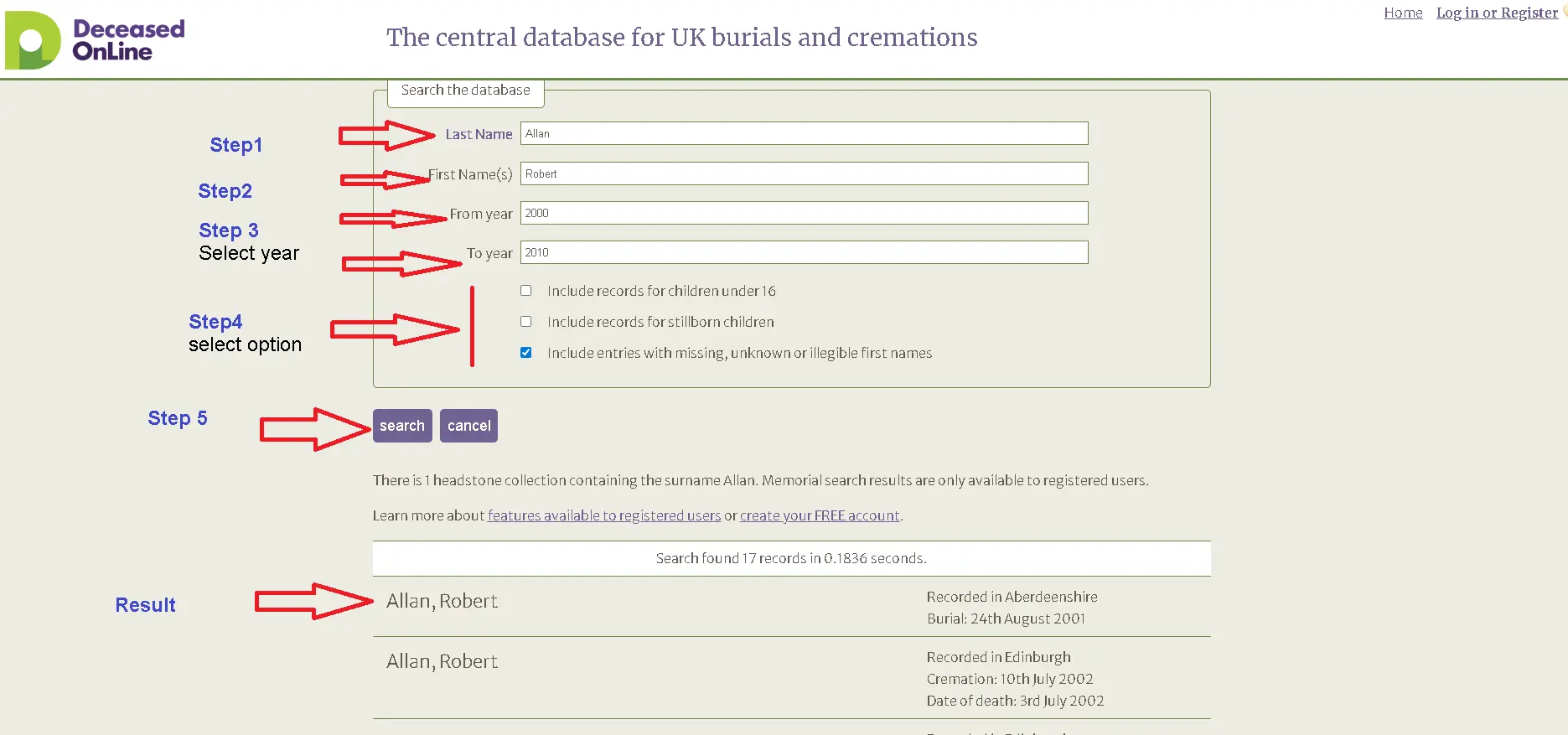
- Deceased online — a unique resource that holds burial and cremation records submitted directly by local councils and burial authorities. Particularly useful for locating exact burial sites. Just follow all the steps
Most of these platforms offer free basic searches, making them an excellent first stop for anyone trying to find a death notice for a specific person without incurring any costs.
Official UK Government Death Records
Official UK death records are maintained through civil registration systems, which have been in place since 1837. These records provide essential details such as name, date of death, and location.
While they may not include full obituary content, they are highly reliable for confirming whether a death has been registered.
FreeBMD is a volunteer-run project that offers a free, fully searchable index of births, marriages, and deaths in England and Wales from 1837 to approximately 2006. It is one of the most comprehensive free genealogy tools available online.
For deaths registered in Scotland, the official resource is Scotland’s People, operated by the National Records of Scotland. Scottish civil death records date from 1855 and are particularly rich in genealogical detail — they typically include the names of the deceased’s parents, spouse, and informant, offering far more context than equivalent English and Welsh records.
In Northern Ireland, the General Register Office Northern Ireland (GRONI) maintains death records from 1864 onwards. Applications for certificates can be made in person at their Belfast office or, increasingly, via their online portal.
Genealogy and Family History Platforms
For deaths that occurred more than a few decades ago — or for anyone building a family tree — genealogy platforms offer some of the most powerful search tools available.
- Ancestry UK — hosts a dedicated UK and Ireland Obituary Index covering published obituaries from 2004 to the present, alongside extensive historical death indexes.
- FamilySearch — a free platform managed by the Church of Jesus Christ of Latter-day Saints, with one of the world’s largest collections of digitized historical records, including UK death registers dating back to the 1500s.
- Findmypast — specializes in British and Irish records, offering fully name-indexed England and Wales death records from 1837 to 2007, as well as Scottish records and a vast newspaper archive.
- Parish registers — for deaths that predate compulsory civil registration in 1837 (or 1855 in Scotland), the primary sources are Anglican parish burial registers. Many have been digitized and indexed through the above platforms.
These platforms typically operate on a subscription or pay-per-view model, but many offer free trials, and FamilySearch remains entirely free.
How to Search Recent Death Records in the UK
While obituaries are optional tributes, death records are mandatory — every death in the UK must be legally registered, creating a permanent official record. This makes death records the most reliable source of confirmation, even when no obituary was published.
Searching Deaths Registered Since 1984 in England and Wales
The GRO’s online index covers deaths registered in England and Wales between 1984 and 2019. Searches are free and can be conducted by name, year of registration, or registration district. Results display the person’s full name, age at death, and the year and district of registration — enough to confirm identity and proceed to ordering a full certificate.
Ordering a certified copy of a death certificate costs a standard fee, payable online directly to the GRO. Certificates are typically dispatched within a few working days. For searches involving deaths registered after 2019, contacting the local register office for the district where the death occurred is the recommended route.
Local register offices often process requests faster than the central GRO, particularly when the registration district is already known. They can confirm whether a death was registered in their district and issue a certificate accordingly.
Quick Reference: UK Obituary and Death Record Resources
The table below summarises the key resources available to anyone searching for obituaries or death records in the United Kingdom, along with their coverage dates, costs, and typical use cases.
| Resource | What It Covers | Date Range | Cost | Best For |
|---|---|---|---|---|
| GRO (England & Wales) | Official death registrations | 1837–present | Free index; cert. fee applies | Verifying a registered death |
| FreeBMD | Death index for Eng. & Wales | 1837–2006 | Free | Quick name-based lookup |
| ScotlandsPeople | Scottish civil & parish records | 1855–present | Pay per view | Deaths in Scotland |
| GRONI | Northern Ireland registrations | 1864–present | Certificate fee | Deaths in N. Ireland |
| Findmypast | British newspapers + death records | 1700s–2007 | Subscription | Historical + newspaper search |
| Ancestry UK | Obituary index + records | 2004–present | Subscription | Modern obituary search |
| FamilySearch | Multi-source death indexes | 1538–present | Free | Deep genealogy research |
| Funeral-notices.co.uk | Published funeral notices (UK) | 2000s–present | Free | Recent deaths & funeral details |
| Deceased Online | Burial & cremation records | Varies by authority | Pay per search | Finding burial location |
Frequently Asked Questions (FAQs)
Can You Find UK Obituaries for Free?
Yes, many obituaries are available for free through funeral websites and online searches. However, some archives require payment for full access.
How Long After Death Is an Obituary Published?
Obituaries are typically published within a few days to a couple of weeks after death, depending on family arrangements and publication schedules.
Why Can’t Some Obituaries Be Found?
Some families choose not to publish obituaries, while others may only share them privately or locally.
Are All Deaths Publicly Recorded in the UK?
Yes, all deaths are officially recorded. However, not all records are immediately accessible online due to legal and privacy restrictions.