























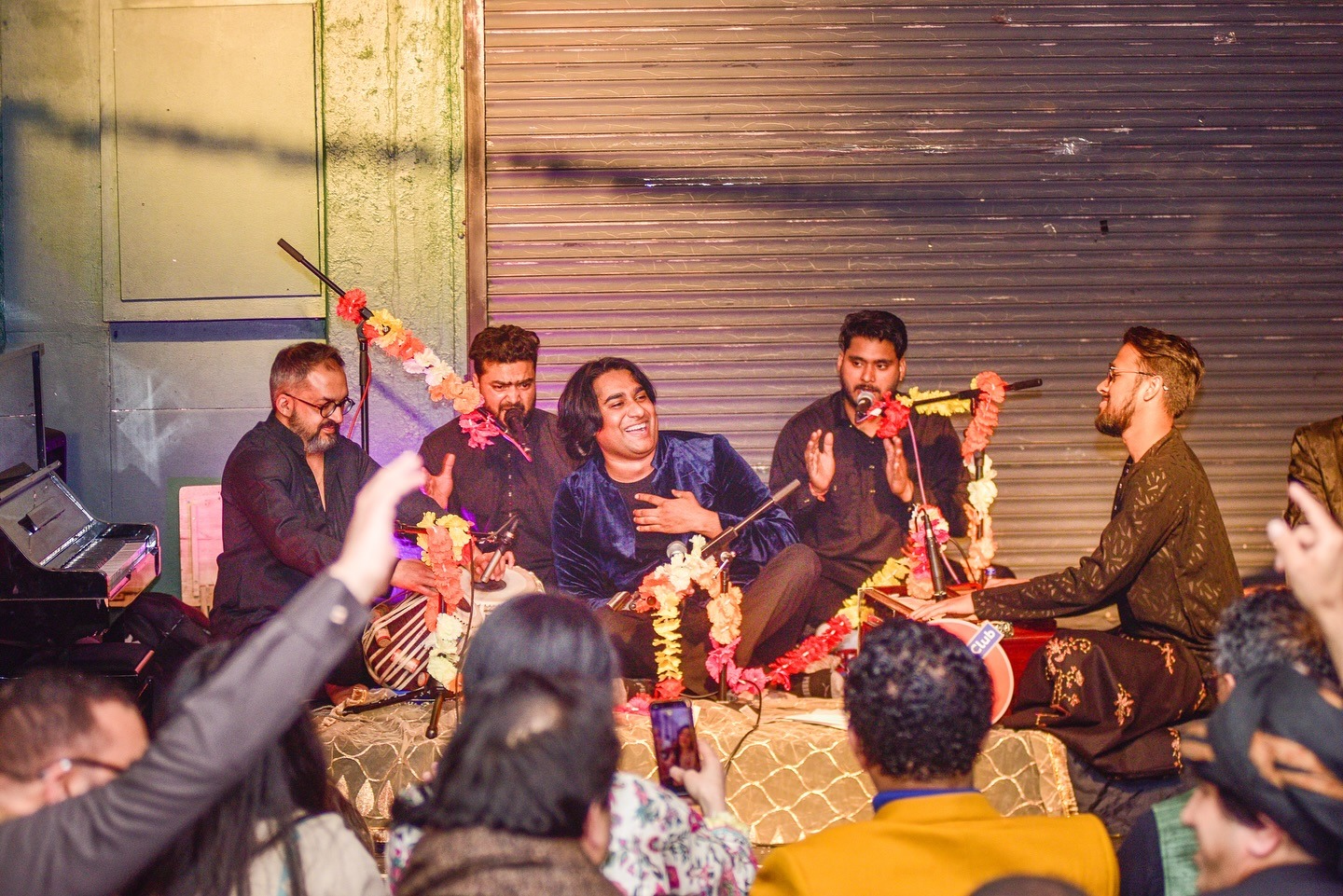
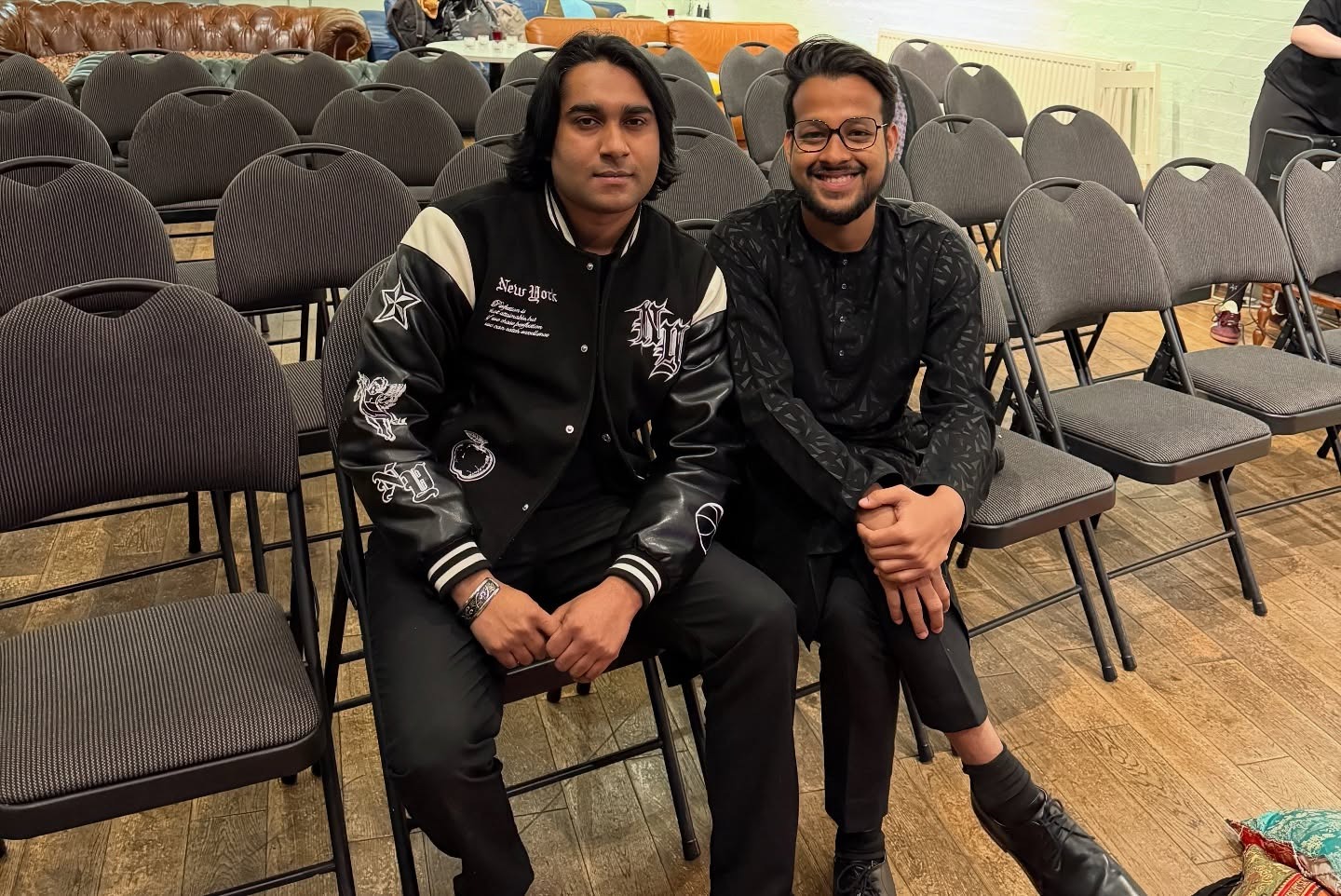
At Karamel London N22 on Saturday 26th April 2025, under the banner of Insaan Culture Club, an evening of raga and qawwali unfolded that resisted easy categorisation—featuring young vocal maestro Ustad Faizan Ali Khan, tabla accompanist Pt. Keval Joshi, and harmonium exponent Sadakat Aman Khan, the concert moved fluidly between Hindustani classical grammar and the ecstatic vocabulary of Sufi devotional music. What gave the evening its coherence, however, was not repertoire alone, but the quiet structural intelligence with which Sadakat Aman Khan shaped the musical space.
The first half opened in Raag Yaman, introduced by Faizan Ali Khan with clarity and poise. His vocal approach favoured tonal purity and measured expansion over overt dramatics, allowing the raag’s architecture to emerge organically. Within this framework, Sadakat Aman Khan’s harmonium playing was marked by restraint. Rather than filling the sonic field, he worked with economy, placing sustained tones beneath the vocal line and gently reinforcing the vadi–samvadi relationship without overstatement.
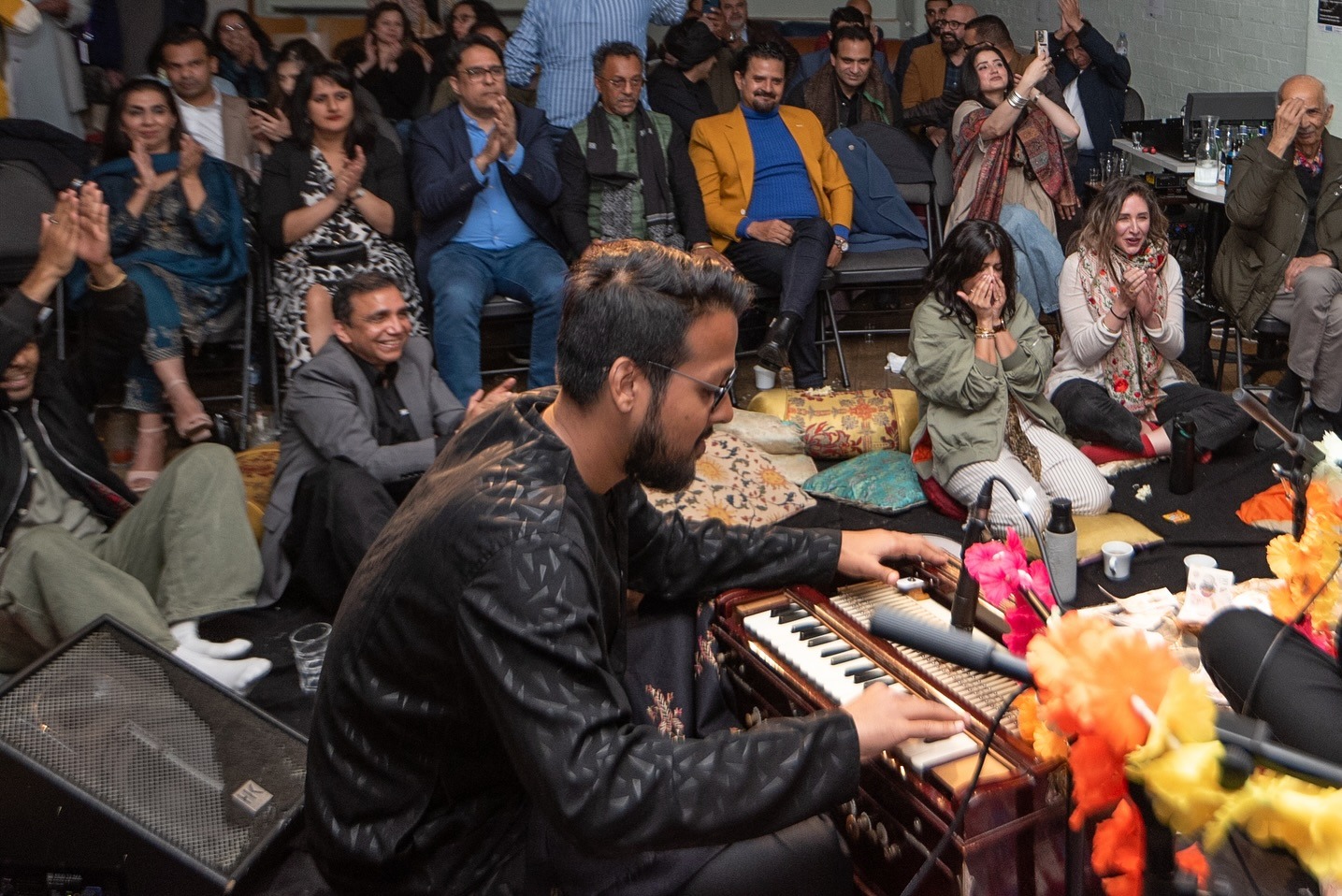
What distinguished his accompaniment was attentiveness. His responses were timed to the singer’s breath rather than to fixed harmonic patterns. The bellows work was especially controlled, giving the harmonium a pliant, almost vocal elasticity. In the vilambit passages, this created a sense of suspension, with phrases allowed to hover and resolve only when the vocal line demanded it. Pt. Keval Joshi’s tabla complemented this balance with understated theka, prioritising tonal clarity over rhythmic assertion and preserving the meditative character of Yaman.
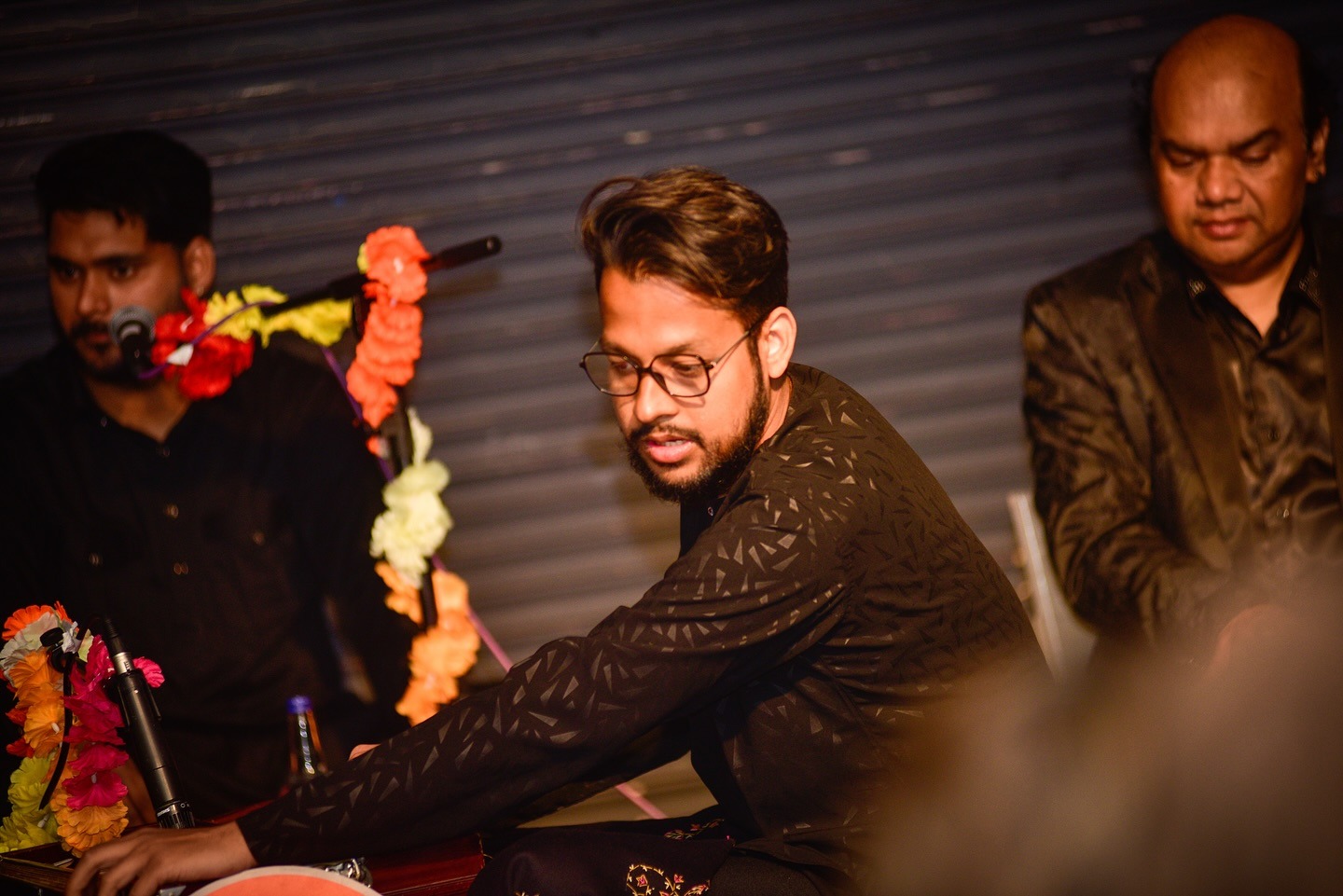
Interspersed between vocal sections were Sadakat Aman Khan’s solo interludes, which emerged as a significant feature of the performance. These moments were neither decorative nor indulgent. Instead, they functioned as reflective pauses, allowing the musical narrative to breathe. His solo passages favoured linear melodic development over density, with careful attention to tone and sustain. In these interludes, the harmonium briefly assumed an independent voice, demonstrating introspective depth while remaining firmly anchored within the raga’s framework. Crucially, these solos reinforced continuity rather than disrupting it, guiding the listener back into the vocal discourse with renewed focus.
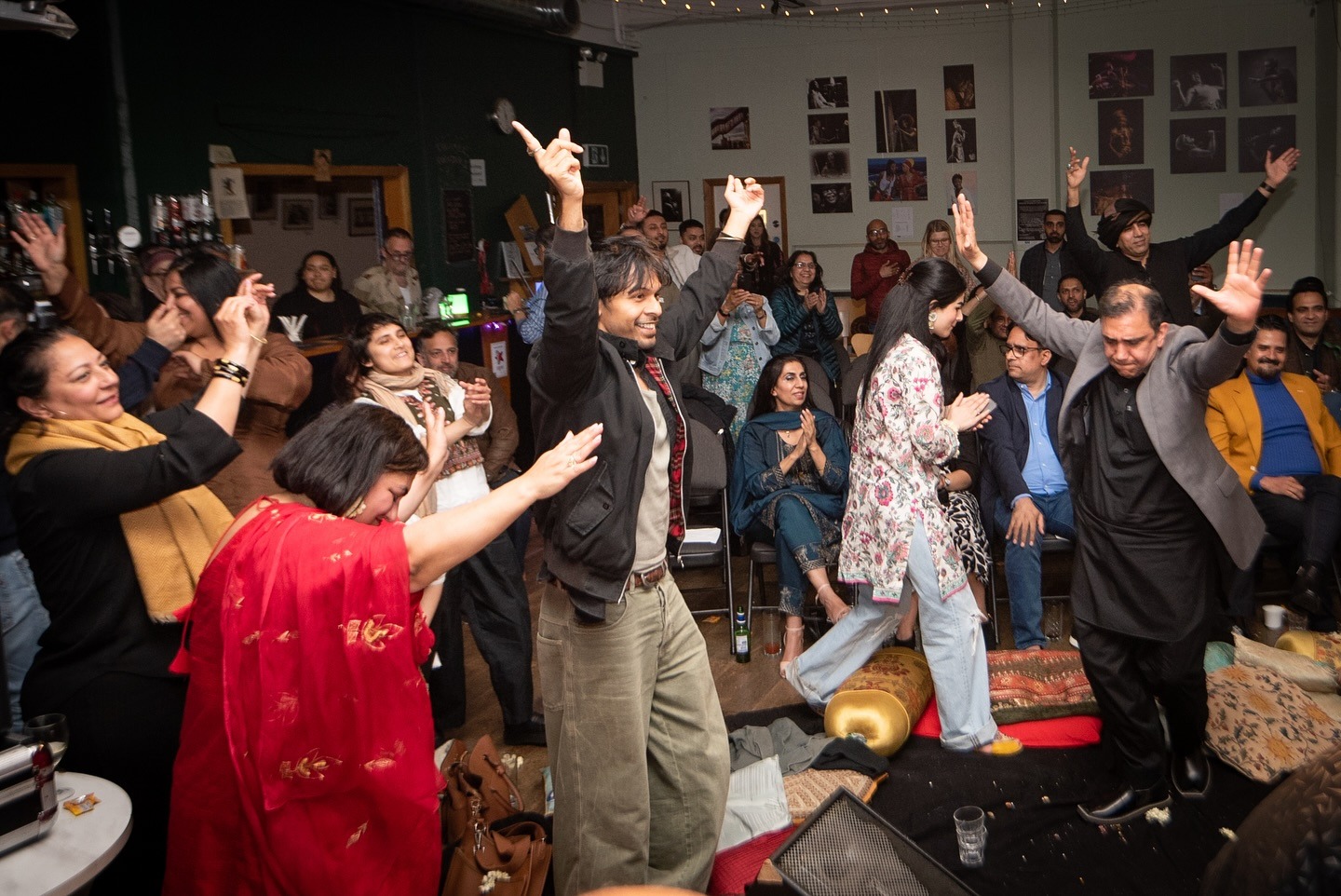
The second half shifted decisively toward qawwali, introducing a different set of aesthetic demands. Pieces such as “Allah Hoo Allah Hoo” and “Tu Kuja Man Kuja” marked the transition from introspection to collective fervour. Here, Sadakat Aman Khan recalibrated his role. The harmonium became more directive, not through increased volume, but through strengthened rhythmic articulation and clearly defined cycles that grounded the ensemble.
In familiar compositions like “Chhaap Tilak Sab Chheeni” and “Mere Rashke Qamar”, his playing demonstrated a careful balance between repetition and variation. Melodic motifs were respected, yet subtle shifts in phrasing prevented predictability. Notably, he avoided excessive chordal layering, a common temptation in amplified qawwali contexts, choosing instead transparency so the vocal line could retain emotional primacy.
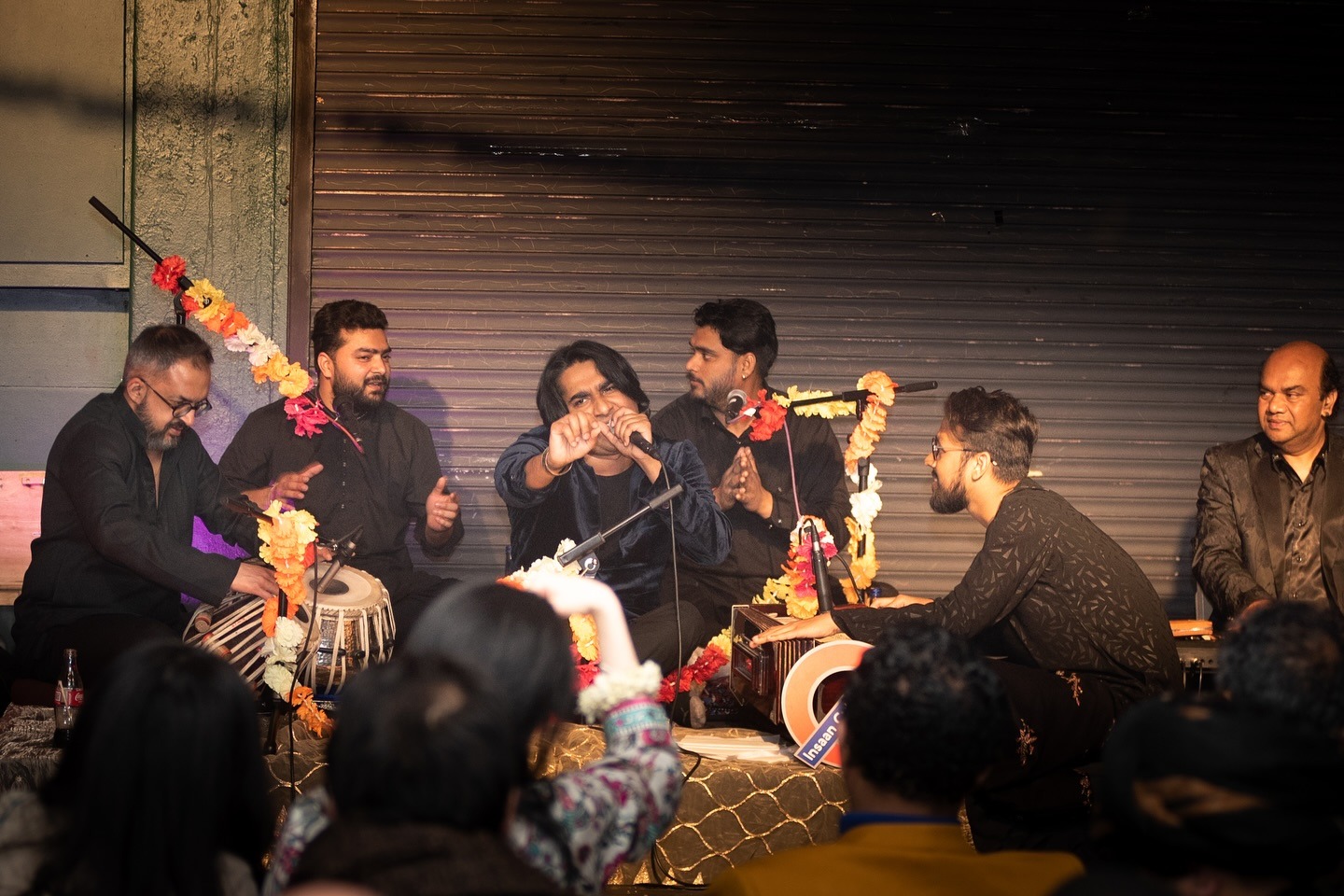
The extended devotional sequence, including “Yeh Jo Halka Halka Suroor Hai,” “Sanu Ik Pal Chain Na Aawe,” and “Ali Maula”, tested the ensemble’s endurance. Across this arc, Sadakat Aman Khan’s consistency remained striking. Even as tempo and intensity increased, his tonal balance held firm, allowing the harmonium to act as a stabilising force. Pt. Keval Joshi’s tabla grew more assertive, adding propulsion without overwhelming the texture.
The evening concluded with “Dum Mast Qalander,” where rhythmic drive and devotional repetition converged. The dialogue between tabla and harmonium was particularly effective, with Khan’s steady pulse anchoring the climactic momentum.
Ultimately, Sadakat Aman Khan’s contribution was defined by context-awareness. Across raga, solo interludes and qawwali, his playing reflected an understanding that the harmonium’s strength lies not in dominance, but in alignment. Positioned between voice and rhythm, structure and spontaneity, devotion and form, his musicianship reaffirmed the instrument’s capacity to serve both classical rigour and devotional expression with integrity. The result was a performance grounded in listening, balance and sustained musical responsibility.