

























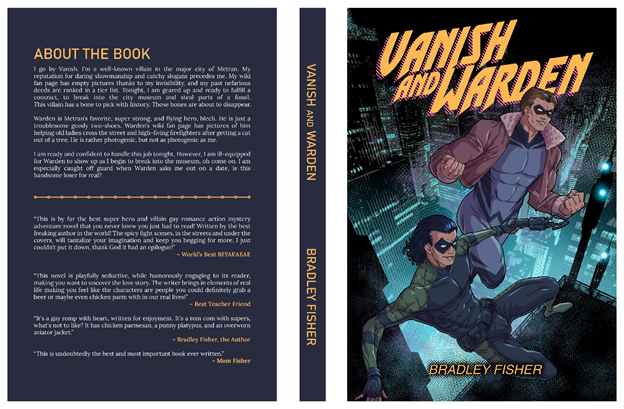
In Bradley Fisher’s Vanish and Warden, laughter isn’t just a punchline; it’s survival. The story has powers, fights, close calls, but underneath it all, there’s this wild, messy humanness. Vanish hides behind jokes, and Warden, well, he acts like he’s too serious to laugh. Except he isn’t. You can almost see it, that small smile he tries to fight off when Vanish says something smart and ridiculous at the worst possible time. Fisher writes those moments like real life: awkward, funny, and sometimes way too honest for comfort.
Vanish Talks Fast, So His Feelings Don’t Catch Up
Vanish is the kind of guy who can turn an argument into stand-up comedy. He’s quick, too quick, and that’s the point. The faster he talks, the less time anyone has to look at what’s really going on. Every joke is a shield. Every grin is a little escape hatch. But the thing is, you can’t run forever. Fisher doesn’t spell it out; he just lets you feel it in the way Vanish pauses a beat too long before laughing again. That silence says more than any line could.
And sure, he’s funny. But it’s not the kind of funny that keeps things light. It’s the kind that makes you ache a little. Like he’s trying to laugh his way out of a storm, only to realize he’s still standing in the rain.
Warden Pretends He Doesn’t Laugh, He Lies
Now, Warden, he’s the opposite. Stoic. Grounded. Always thinking before he speaks. You’d think he’s immune to all the chaos Vanish brings into his neat, controlled world. But Fisher knows better; no one is immune to charm, especially not this kind. Bit by bit, the cracks show. Maybe it’s a smirk that slips through. Maybe it’s how he starts answering sarcasm with sarcasm.
The best part? He doesn’t even realize it’s happening. One day, he’s rolling his eyes; the next, he’s enjoying it. Warden doesn’t lose control, but around Vanish, he loosens. He starts to live instead of just leading. And Fisher makes that shift feel quiet but real, like a door opening that neither man saw coming.
Their Conversations Sound Like Fights In Disguise
Half the story feels like two people arguing their way into something tender. The rhythm between them is ridiculous, sharp words, sharp minds, and underneath it all, a little too much care. Fisher writes the dialogue so naturally it feels unscripted. There’s teasing, bickering, one-liners flying like sparks, and then—boom—a sentence that lands harder than expected.
It’s not romance that happens in soft lighting. It’s banter that builds trust. It’s two people trying not to admit they’re falling for each other in the middle of a mess. Every insult hides affection. Every laugh covers fear. And when that curtain slips, even for a second, it hits you.

Laughter Slowly Stops Being Armor
Somewhere between the danger and the chaos, something shifts. The jokes don’t stop, but they sound different now, less defensive, more open. Fisher doesn’t make it a big scene. He just lets it happen. A small smile here, a joke that doesn’t sting, a line that feels almost like a confession.
Vanish still jokes, sure, but not to run. Now it’s how he stays. Warden stops trying to fix everything. He listens, really listens. And the silence between them, once awkward, turns warm. You start to realize the laughter that kept them apart is the same thing bringing them close. It’s messy, slow, and so human you almost forget they have powers at all.
Fisher Finds Truth In The Funniest Places
That’s what makes Vanish and Warden so good. Fisher doesn’t use humor to dodge emotion; he uses it to uncover it. He knows people crack jokes when they’re scared, when they’re falling, when they don’t know how to say “I care.” It’s not comedy for the sake of laughs. It’s a connection. It’s heart disguised as humor.
By the last few pages, you’re not just reading about a hero and a thief. You’re reading about two men who stop pretending that laughter is only for hiding. It becomes something else, proof that they’re still there, still fighting, still human.
And maybe that’s the point Fisher’s been making all along. That sometimes the bravest thing you can do isn’t to drop the joke. It’s to keep it, but this time, mean it.