

























How Jay McElroy’s Morning Notes Became Emotional Grounding
In Lunchbox Poetry, Jay McElroy does not frame his habit as a parenting strategy. That absence matters. He writes because he wants to reach his children in a small, reliable way before the day pulls them apart. The napkin notes appear during a moment when children are physically away from home but still emotionally open. That timing gives the messages unusual strength. They arrive when reassurance matters but is rarely available.
Why Emotional Safety Is Built Through Repetition Not Intensity
Jay’s notes do not rely on dramatic language. They rely on repetition. Children feel safe when something shows up again and again without conditions. The daily presence of the note mattered more than what any single note said. Emotional security forms when children stop wondering if care will appear. Jay removed that uncertainty quietly.
How Children Internalize Stability Through Predictable Care
Children learn emotional patterns before they understand emotional concepts. Jay’s habit taught stability without explanation. The message did not need to announce itself as support. It functioned as support simply by existing. Over time, that predictability became part of how his children experienced the world. They carried a sense of steadiness into unfamiliar environments because it had already been practiced at home.
How Handwritten Messages Slow The Emotional Pace Of A Child’s Day
School days move fast. Expectations stack quickly. A handwritten note interrupts that speed. It forces a pause. Jay’s children encountered something familiar and personal in the middle of an otherwise structured day. That pause mattered. It allowed their nervous systems to settle briefly. Emotional regulation often begins with moments like that, even when children cannot name it.
Why Presence Matters More Than Precision
Jay’s notes were not carefully crafted. Some were rushed. Some were messy. That imperfection communicated something important. Emotional presence does not require polish. Children recognize effort more easily than elegance. Jay’s writing showed that connection does not depend on performance. It depends on showing up.
How Emotional Security Becomes Portable Over Time
As the years passed, the physical notes stopped appearing. But the emotional effect did not disappear. Jay’s children carried the feeling of being supported into new stages of life. Emotional security becomes portable when it is built through consistency. It no longer requires constant reinforcement. It becomes internal.
Why This Quiet Model Still Resonates With Modern Families
Many parents search for techniques to build resilience. Lunchbox Poetry offers no technique, only an example. Jay McElroy’s story resonates because it shows how emotional safety can be built without speeches, systems, or pressure. A small ritual repeated with care can shape a child’s inner world more effectively than grand gestures ever could.
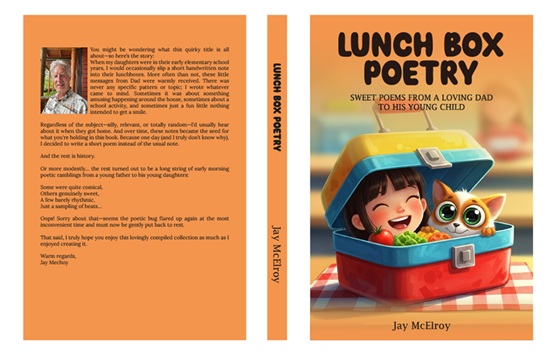
How Gentle Creativity Helped Children Build Confidence Without Being Pushed
Jay McElroy never positions his notes as lessons. In Lunchbox Poetry, creativity appears naturally. Characters show up. Humor slips in. Nothing announces itself as meaningful. That absence of pressure allowed confidence to develop organically. Children respond more openly when they are not being guided toward a conclusion.
Why Humor Creates Emotional Openness
Laughter lowers defenses. Jay’s playful notes opened emotional space for his children before they encountered challenges at school. A smiling moment early in the day softened what followed. Humor did not distract from growth. It enabled it. Confidence often begins with ease, not encouragement.
How Imagination Helps Children Reframe Mistakes
The small stories Jay shared allowed mistakes to feel normal. Characters struggled. Characters tried again. The tone remained light. This approach taught resilience without naming it. Children absorbed the message that failure was not dangerous. It was part of movement. That understanding builds confidence quietly.
How Creativity Signals Acceptance Without Evaluation
Jay did not correct his children through the notes. He did not ask them to improve. He offered imagination without judgment. That absence of evaluation mattered. Confidence grows best when children do not feel measured. Jay’s notes existed without expectations attached.