

























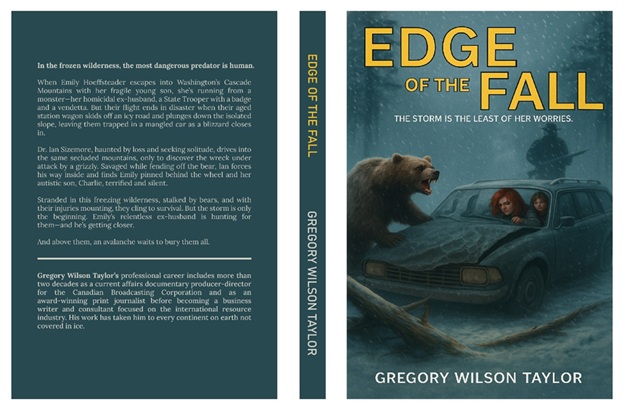
In Edge Of The Fall by Gregory Wilson Taylor, survival is not framed as bravery or triumph. It is presented as endurance under pressure, moment by moment, without relief. The story follows Emily Hoeffsteader, her young son Charlie, and the injured doctor Ian as they are trapped after a violent crash in the mountains. What makes this story powerful is not the accident itself, but what follows. Survival becomes a slow grind shaped by pain, fear, memory, and responsibility, with no promise of reward waiting at the end.
Survival Begins With Immediate Physical Reality
The crash leaves no room for denial. Cold sets in quickly. Injuries limit movement. Darkness removes orientation. Emily does not have time to process what happened before she must act. Her body reacts before her mind catches up. Pain becomes background noise because there are more urgent concerns. Charlie is alive. That fact alone pushes her forward. The book grounds survival in physical detail, reminding the reader that endurance starts with basic needs before anything else can matter.
The Weight Of Responsibility Never Lifts
Emily’s survival is inseparable from Charlie’s. She cannot collapse, panic freely, or give in to pain because her child depends on her. That responsibility shapes every thought. Even fear must be controlled. The story shows how parenthood under extreme stress becomes a form of constant vigilance. Emily does not survive for herself. She survives because stopping is not an option.
Injury As A Constant Limitation
Ian’s injuries add another layer to survival. He brings medical knowledge, but his own body works against him. He bleeds, coughs, and weakens. The book avoids turning him into a heroic savior. He helps where he can, but he also becomes someone who needs help. Survival here is collective. Each person carries part of the burden, even when their strength fades.
Time Stretching Into Something Unforgiving
One of the quiet dangers in the story is time. Minutes blur. Hours feel endless. Cold stretches every moment. Waiting becomes its own threat. Emily measures survival in small increments. Can they make it through the night. Can Charlie stay warm. Can Ian stay conscious. The book captures how time under stress loses structure and becomes something heavy and oppressive.
Emotional Endurance As A Separate Battle
Physical survival does not cancel emotional strain. Emily’s memories surface when silence takes over. Guilt, fear, and anger rise without warning. The wilderness leaves space for those thoughts to grow louder. The story treats emotional endurance as equally exhausting. There is no relief from memory, only the need to keep moving despite it.
Moral Decisions Without Clear Answers
Survival forces decisions that offer no clean outcomes. Emily must weigh rescue against danger. Silence against exposure. Trust against caution. The book does not frame these choices as right or wrong. It presents them as necessary responses to an impossible situation. Survival becomes less about morality and more about protecting what matters most.
Trust Built Through Shared Vulnerability
Trust between Emily and Ian develops unevenly. It does not arrive through reassurance or promises. It grows through shared vulnerability. Pain makes honesty unavoidable. Fear strips away pretense. Their connection feels fragile because it is built under pressure, not comfort. That fragility makes it believable.
Nature As An Unyielding Force
The mountains never soften. Snow continues to fall. Cold persists. The environment does not respond to effort or intention. Nature in Edge Of The Fall is not cruel, but it is indifferent. That indifference forces characters to adapt rather than expect mercy. Survival means working within limits rather than fighting them.
The Cost Of Making It Through
By the end of the story, survival has a cost. Bodies are damaged. Trust is tested. Certainty is gone. The book does not promise healing or closure. It acknowledges that survival often leaves scars, both visible and unseen. Endurance changes people, sometimes permanently.
Survival Without Celebration Or Glory
Edge Of The Fall refuses to turn survival into spectacle. There is no victory lap. There is only continuation. Gregory Wilson Taylor tells a story where making it through does not erase what was endured. Survival here is quiet, difficult, and deeply human.
That honesty gives the story its weight. It stays with the reader because it does not lie about what endurance really demands when everything familiar falls away.