





















- Could you briefly introduce yourself to our readers?
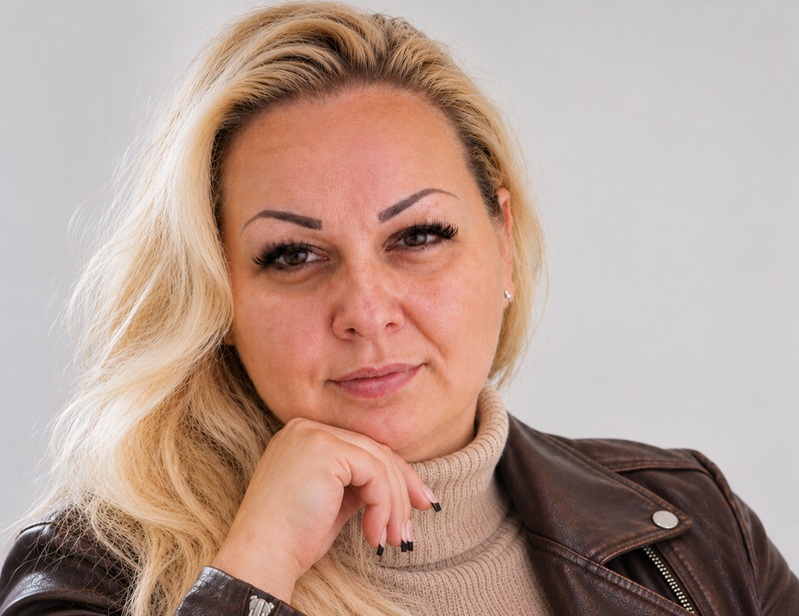
My name is Zsuzsanna Bodo, I am a museum specialist adviser and MTh theologian, currently pursuing my PhD at the Wesley Doctoral School of Theology and Religious Education in Budapest. My professional background spans several decades of archaeological and museum work. Born in Hungary 1983, I moved to London in 2016, where I further broadened my professional experience and international perspective. Although my doctoral studies have brought me back to Hungary as my current research base, my work continues to take me across borders. I regularly travel to museums and archaeological collections around the world, examining material evidence and exploring the connections between ancient history, religion, and cultural heritage.
- What inspired your interest in ancient history?
My fascination with ancient history began at a very young age. By the time I was fourteen, I already knew that I wanted to become an Egyptologist. Over the years, my interests gradually expanded towards biblical archaeology, and eventually, these two fields came together to shape the focus of my current research.My practical experience in archaeology began in 2003, when I started working on smaller archaeological excavations. In the years that followed, I continued my career as an archaeological technician, gaining valuable hands-on experience in the field.
I firmly believe that understanding our history is essential. We should not live solely in the present, disconnected from the civilizations, ideas, and events that shaped the world we know today. For me, studying the past is not simply a professional pursuit; it is a way of understanding who we are and how we came to be.
- Why did you choose Akhenaten as a research subject?
My fascination with Akhenaten also goes back to my childhood. He has always held a special place in my interest in ancient Egyptian history. Akhenaten, originally known as Amenhotep IV, stands out as one of the most remarkable figures in world history. He initiated one of the most profound religious, political, and artistic revolutions in ancient Egypt, challenging traditions that had shaped Egyptian civilization for centuries.To me, Akhenaten was a true revolutionary, a ruler who dared to challenge the established order and pursue a vision that was radically different from anything that had come before. Although his reign was relatively short, the impact of his actions was extraordinary, leaving a lasting mark on history. It is precisely this combination of courage, controversy, and historical significance that continues to fascinate me and makes him such a compelling subject of research. And as an interesting historical detail, Akhenaten is the father of the world-famous pharaoh Tutankhamun.
- Who was King Josiah, and why was he important?
King Josiah was a prominent biblical figure and a ruler of the ancient Kingdom of Judah, traditionally dated to approximately 640–609 BCE. His story is recorded in the Hebrew Bible, particularly in the Second Book of Kings and the Second Book of Chronicles, where he is portrayed as a king who sought to transform the religious life of his kingdom. According to the biblical narrative, Josiah initiated a major religious reform aimed at centralizing worship in Jerusalem and eliminating competing cultic practices. The account describes the destruction of altars, sacred objects, and religious sites, traditionally associated with the discovery of a book of the law in the Temple of Jerusalem. However, an important distinction must be made between biblical tradition and independently verifiable historical evidence. Although Josiah is generally regarded as a historical ruler, his existence has not yet been conclusively confirmed by an undisputed contemporary inscription outside the Bible. More importantly, the scale, implementation, and archaeological traces of the religious reform attributed to him remain subjects of scholarly debate. This uncertainty is precisely what makes Josiah particularly interesting to me. My research does not seek to prove the biblical narrative, but rather to investigate whether archaeological evidence can independently support, challenge, or offer alternative explanations for the religious transformations traditionally associated with his reign.
- What similarities existed between their religious reforms?
Although Akhenaten and King Josiah lived centuries apart and belonged to very different cultural traditions, their religious reforms share several striking similarities. Both rulers are associated with attempts to transform established religious practices, strengthen the authority of a particular deity, and challenge traditional forms of worship.
In both cases, religious change was closely connected to royal power, and the removal or destruction of cultic objects and sacred images played a significant role in the surviving accounts and evidence. However, while Akhenaten’s religious revolution is supported by substantial archaeological material, the historical extent and physical traces of Josiah’s reforms remain uncertain. This contrast is central to my research: understanding how religiously motivated destruction becomes visible in the archaeological record, and whether similar patterns can be identified across two very different ancient civilizations.
- How does archaeology help uncover ancient religious history?
Archaeology allows us to explore ancient religious history through physical evidence rather than relying exclusively on written accounts. Temples, altars, inscriptions, religious objects, and even traces of deliberate destruction can reveal how beliefs and religious practices changed over time. My research combines comparative archaeological analysis, the critical examination of historical and biblical texts, and the direct study of museum collections. I focus particularly on identifying patterns of intentional damage, the removal of religious imagery, and changes in sacred spaces. An essential part of my methodology is distinguishing religiously motivated destruction from other processes, such as accidental damage, political conflict, or the secondary reuse of objects. One of the central ideas guiding my work is that absence itself can be meaningful archaeological evidence. However, the disappearance of an object or image does not automatically prove iconoclasm. My aim is to investigate what the surviving material can genuinely tell us, while remaining equally attentive to what cannot be established with certainty.
- What role do museums playin your research?
Museums play a fundamental role in my research, particularly because of the very different circumstances in which Egyptian and ancient Judahite archaeological material has been preserved and distributed.While much of the archaeological material from ancient Judah has remained within present-day Israel, the situation is considerably different for ancient Egypt. A significant proportion of the surviving objects from the Amarna period is now dispersed across museums and collections around the world.This geographical fragmentation presents both a challenge and an opportunity. To develop a comprehensive understanding of Akhenaten’s religious revolution and its material consequences, it is essential to examine objects held in different institutions, compare their physical characteristics, and investigate possible connections between fragments that are now separated by thousands of kilometres.
For this reason, international museum research is not simply an additional aspect of my work; it is an essential part of my methodology. By bringing together evidence scattered across different collections, I hope to contribute to a more complete picture of this extraordinary period in ancient history.
- What is your most interesting archaeological discovery so far?
I believe it is still too early to single out one particular discovery. One of the most fascinating aspects of archaeology is its unpredictability , we can never know in advance what we might uncover or when a seemingly insignificant piece of evidence may change our understanding of the past. For me, the ultimate goal of archaeological research is not to make a sensational, world-famous discovery, but to reconstruct historical events and understand the processes that shaped ancient societies. Sometimes, even the smallest fragment or an apparently insignificant absence can provide an important clue. I find the process of gradually bringing together scattered pieces of evidence far more rewarding than the pursuit of a single spectacular find. After all, archaeology is not simply about discovering objects; it is about discovering the stories they can tell us.
- What are your future research plans?
My immediate priority is to complete my current research project, which is a substantial and ambitious undertaking that I expect will require at least four to five years of dedicated work. Given its international scope and the complexity of the archaeological and historical evidence involved, I believe it is essential to approach the subject with patience, thoroughness, and scientific rigour. Looking further ahead, I hope to continue contributing to the academic world through research, publications, and international scholarly collaboration. Alternatively, I may return to one of my original research interests: the Exodus, a subject that has fascinated me for many years and continues to raise compelling historical and archaeological questions. Whatever direction I ultimately choose, my ambition is to continue exploring the ancient world and contributing to our understanding of its history.
- What would you like readers to learn from your research?
Above all, I would like readers to understand that history is not simply a collection of dates, names, and events from a distant past. It is the story of people who, despite living thousands of years ago, faced questions about faith, power, identity, and change that are still relevant to us today. Through my research, I hope to show that what we believe we know about history is not always the complete picture. Archaeology allows us to question established interpretations, uncover forgotten details, and sometimes discover that the absence of evidence can be just as thought-provoking as its presence.
I would also like to encourage people to visit museums, explore history with curiosity, and look beyond what is written in textbooks. Every ancient object has a story, and sometimes even a damaged fragment can open a window onto an entire civilization.
Ultimately, I hope my work inspires people to see the past not as something distant and irrelevant, but as an essential part of understanding our own world.


